This case study documents a residential HVAC mold inspection performed by Home Enviro at a home in Weston, Florida, where a homeowner's concerns about musty odors and dusty vents led to the discovery of a mechanical failure inside the air handling system. What began as a routine call about indoor air quality ultimately traced back to a small but consequential problem: the adhesive on the tape sealing the HVAC plenum had deteriorated, opening a pathway for contaminated garage air, dust, fiberglass particles, and mold spores to enter the system that conditions the entire home.
Customer Concern
The homeowner contacted Home Enviro after noticing persistent musty odors throughout the residence, along with visible discoloration around several HVAC supply vents. The air handling unit for this home was located in the attached garage, a common configuration in many Weston, Florida residences. Despite replacing air filters on a regular schedule, the occupants continued to experience recurring dust accumulation inside the home and ongoing concerns about the quality of their indoor air. The combination of a persistent odor, vent staining, and dust that returned no matter how often filters were changed pointed toward a source inside the mechanical system itself rather than a simple housekeeping issue.
Inspection Overview and Methodology
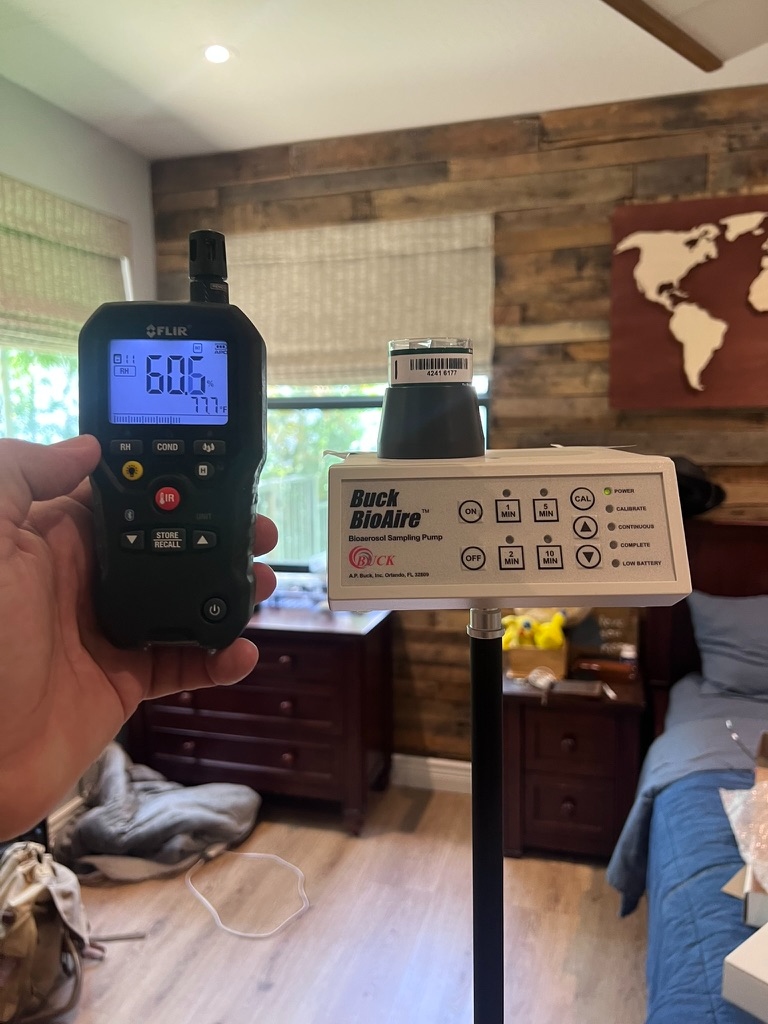
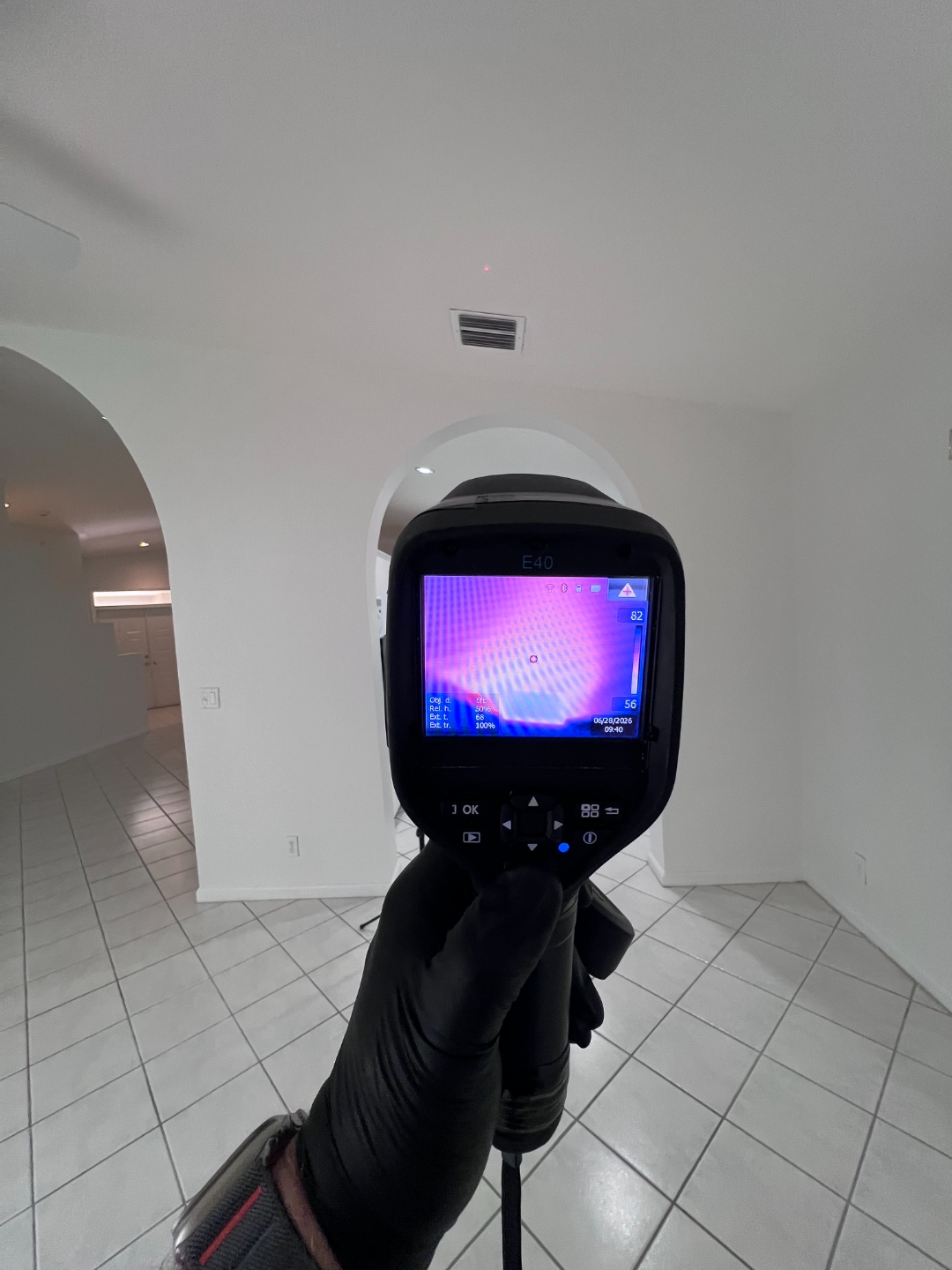
To evaluate the HVAC system, ductwork, and the indoor environment as a whole, Home Enviro performed a comprehensive mold assessment consistent with the standards of a thorough HVAC mold inspection. The inspection included a visual examination of the HVAC system and ductwork, moisture measurements taken throughout the living space, thermal imaging to detect temperature anomalies not visible to the naked eye, a hands-on inspection of the air handler, plenum, and accessible duct connections, and mold sampling where appropriate to support the visual findings. This layered approach is designed specifically to catch conditions inside a mechanical system that a general household inspection would not be equipped to identify.
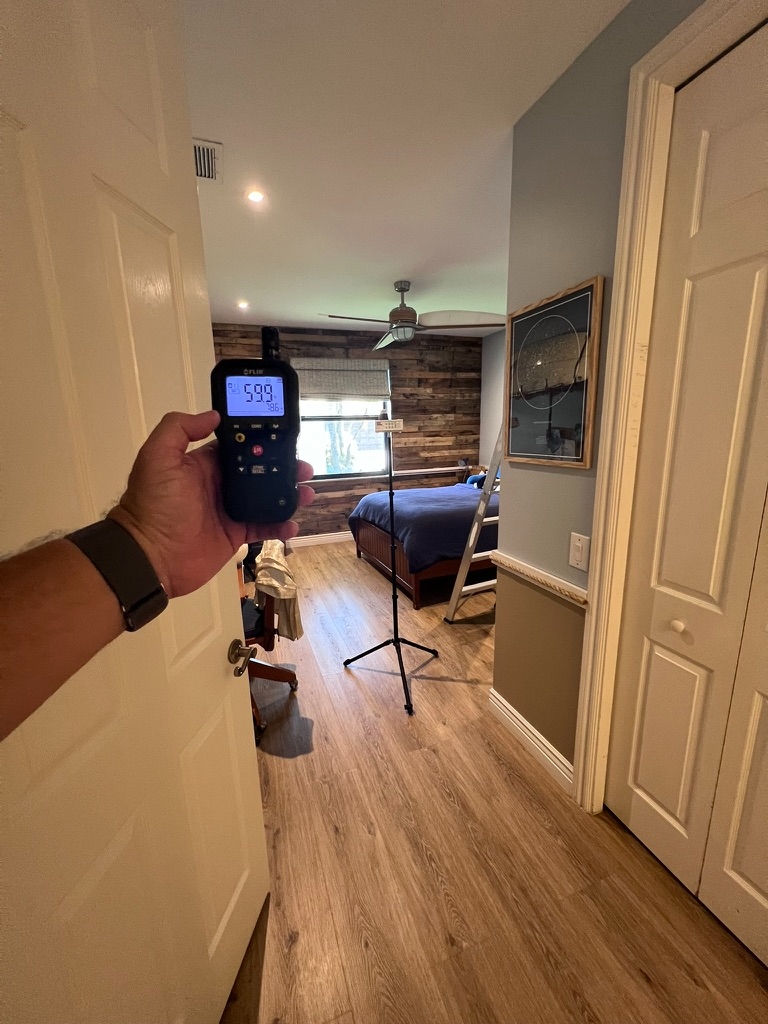
Moisture readings were also taken in additional bedrooms and hallway areas throughout the home to establish a baseline understanding of indoor humidity conditions relative to the HVAC findings.
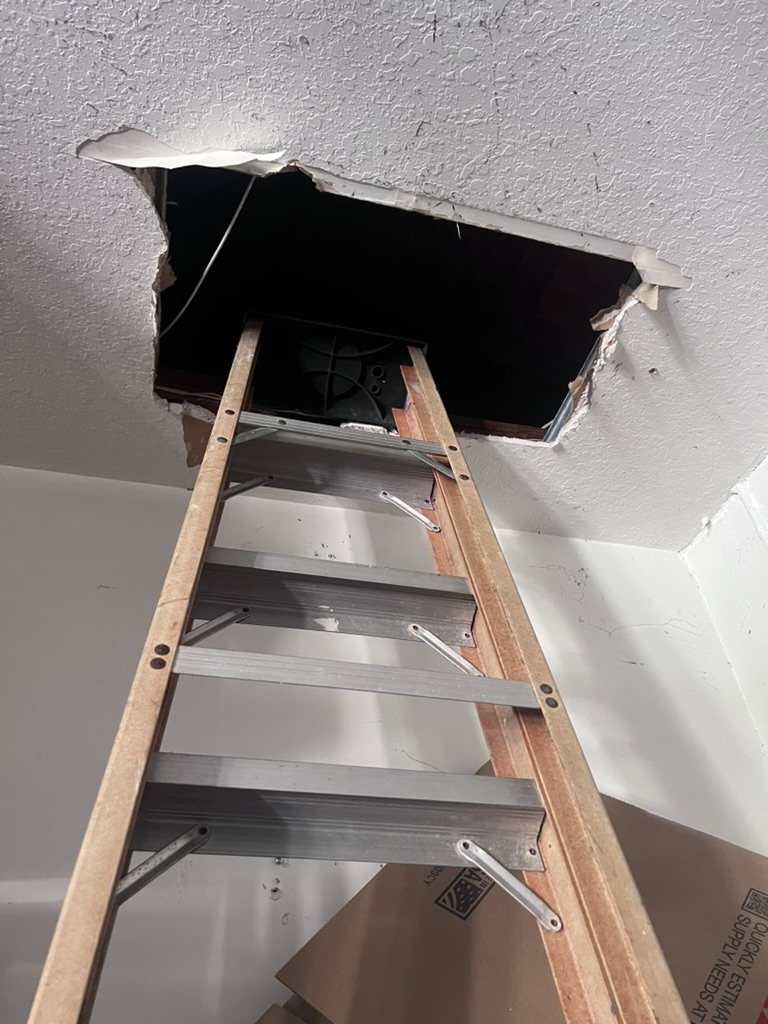
Access to the attic space above the home was required to reach and inspect portions of the duct system serving the residence, and a ladder was set up at the attic hatch to allow the inspector to safely enter and document conditions overhead.
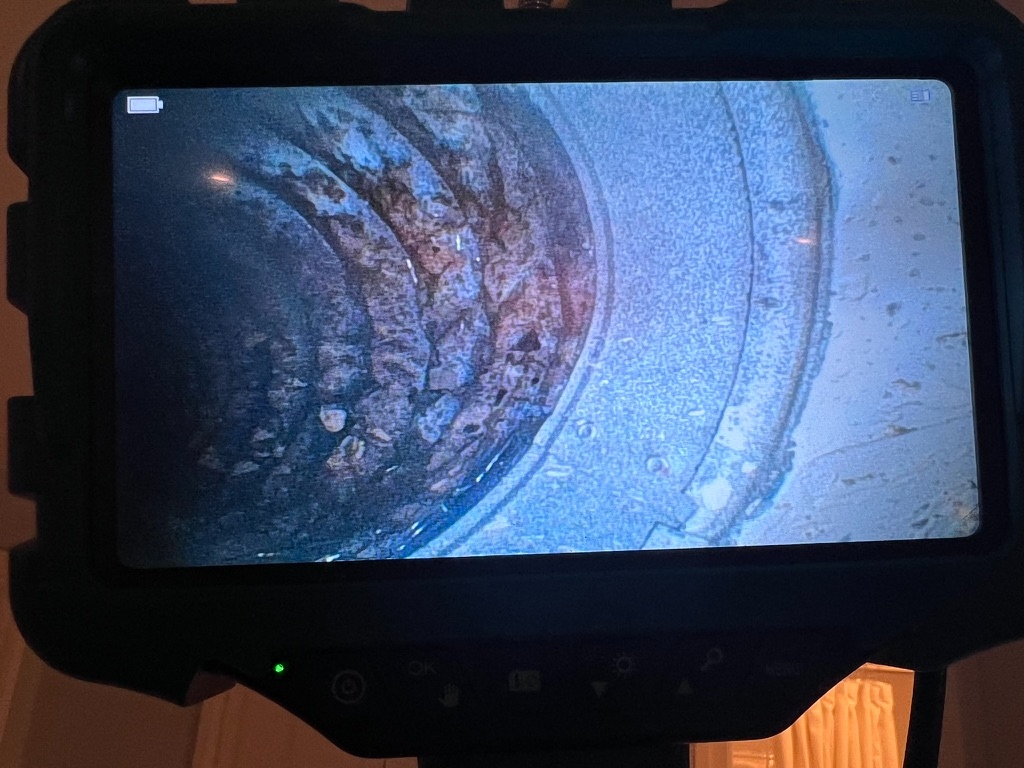
A borescope camera was also used to visually examine the interior surfaces of the ductwork without requiring full disassembly of the duct system, allowing the inspection team to document debris and staining directly inside the air pathway.
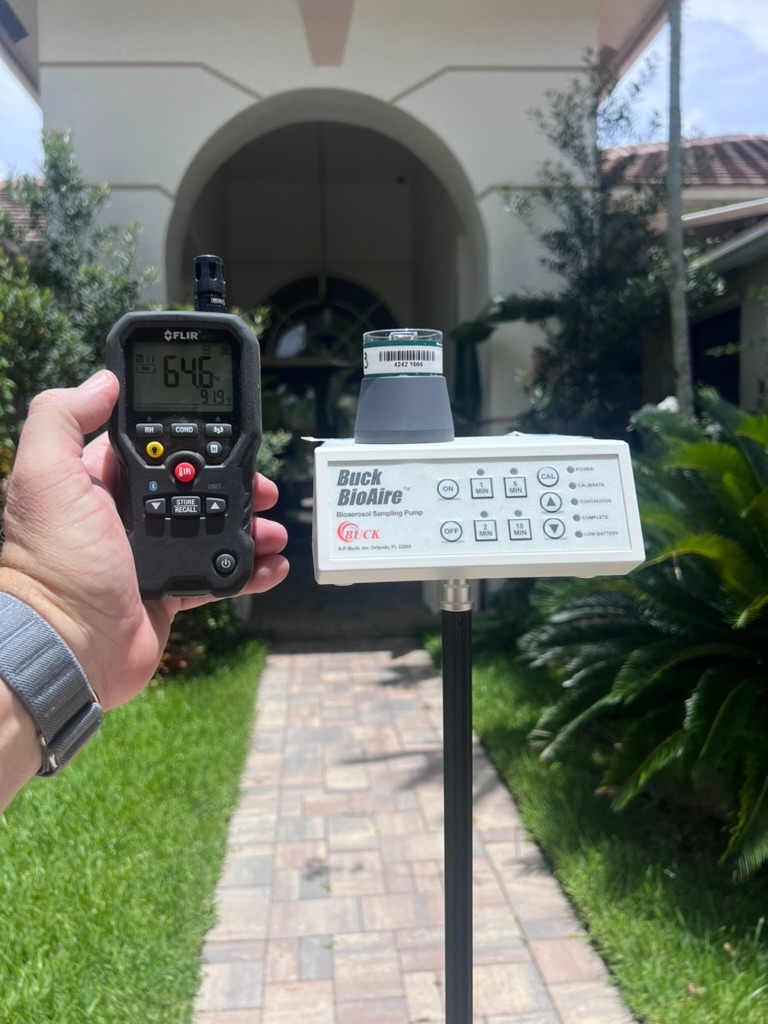
To provide a baseline comparison for any indoor air sampling results, an outdoor control sample was also collected using a calibrated air sampling pump.
Findings
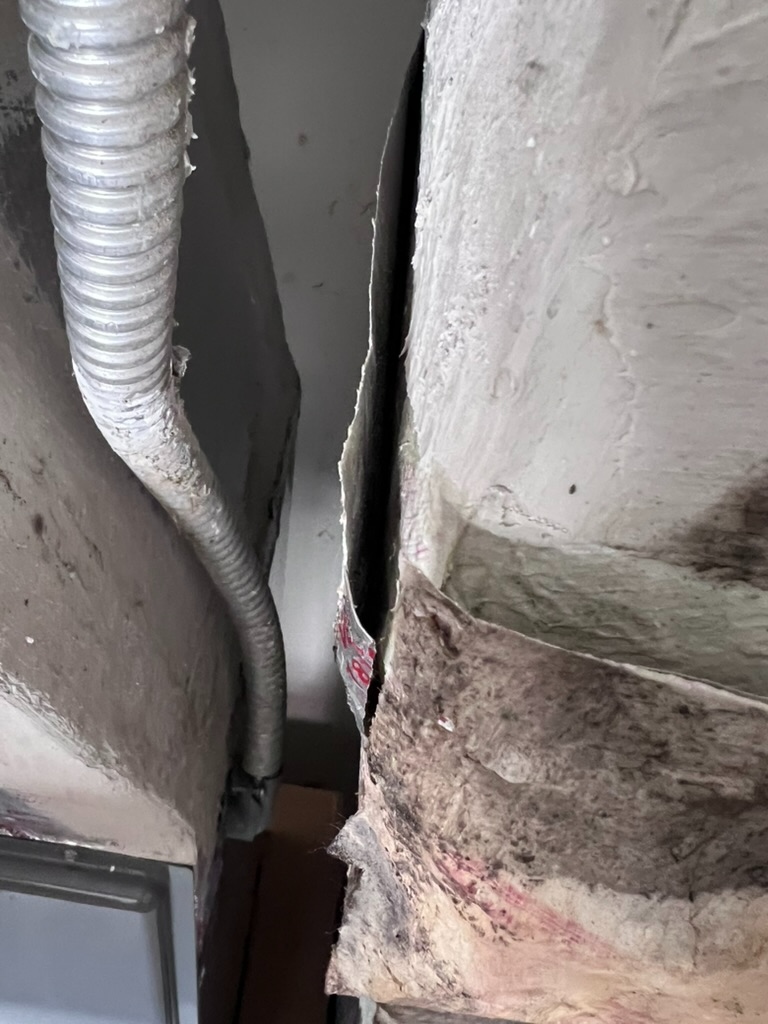
The inspection revealed significant deterioration of the adhesive used on the HVAC plenum tape surrounding the air handling unit. Over time, that adhesive had begun to separate and break down as a result of age, elevated temperatures, humidity, and the normal operation of the system. As the tape adhesive deteriorated, visible gaps developed around the plenum and duct connections.
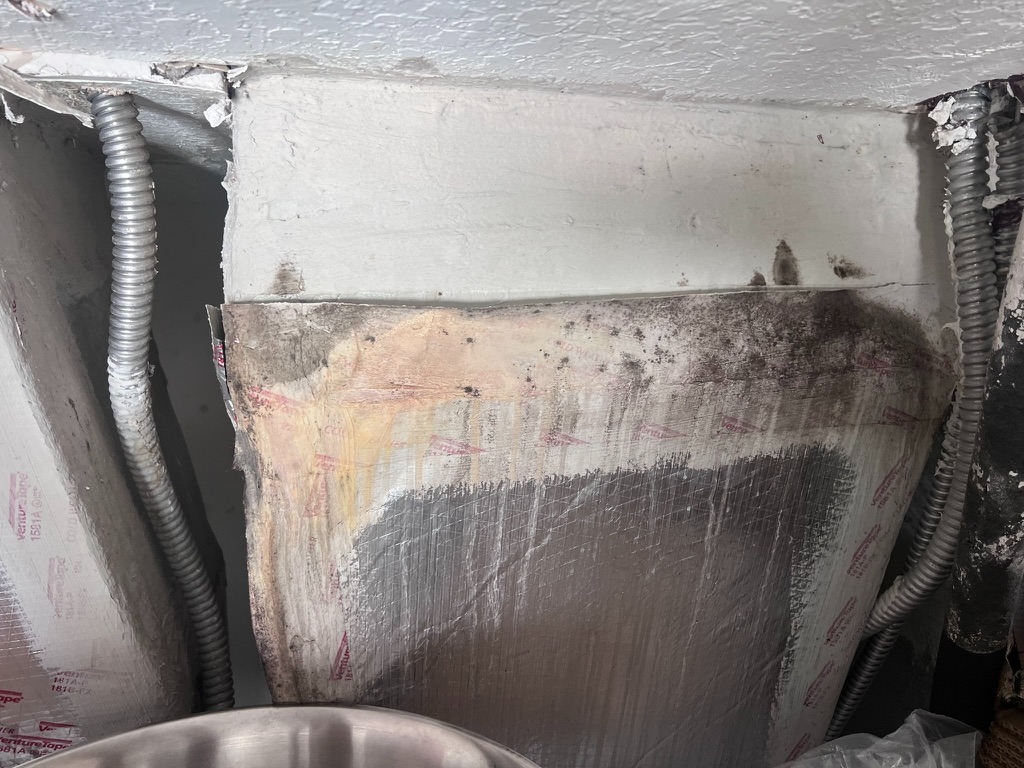
These openings allowed contaminated air, dust, fiberglass particles, and fungal spores from the garage environment to be drawn directly into the HVAC system during normal operation. Visible microbial growth was observed on portions of the HVAC cabinet and around sections of the plenum assembly.
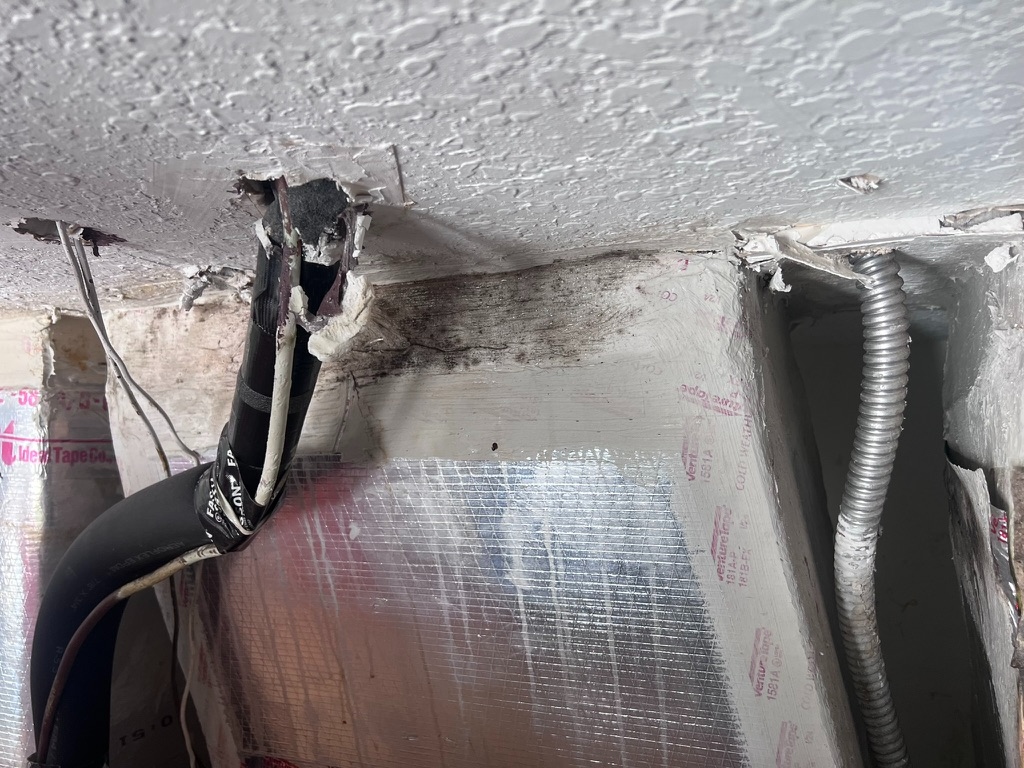
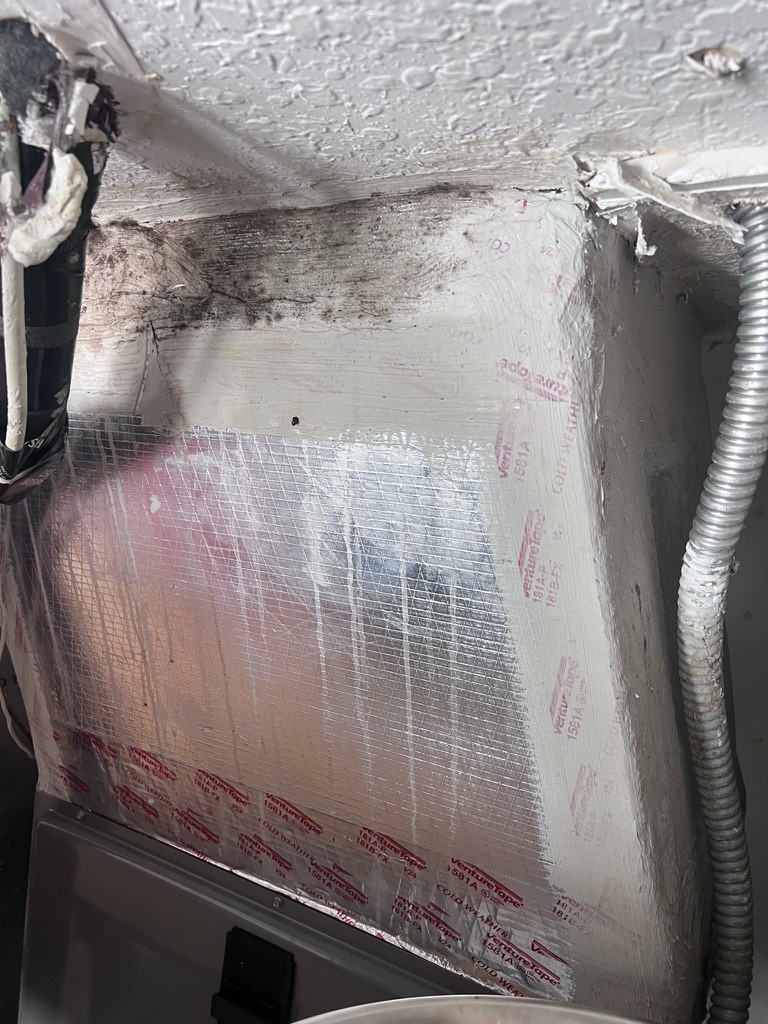
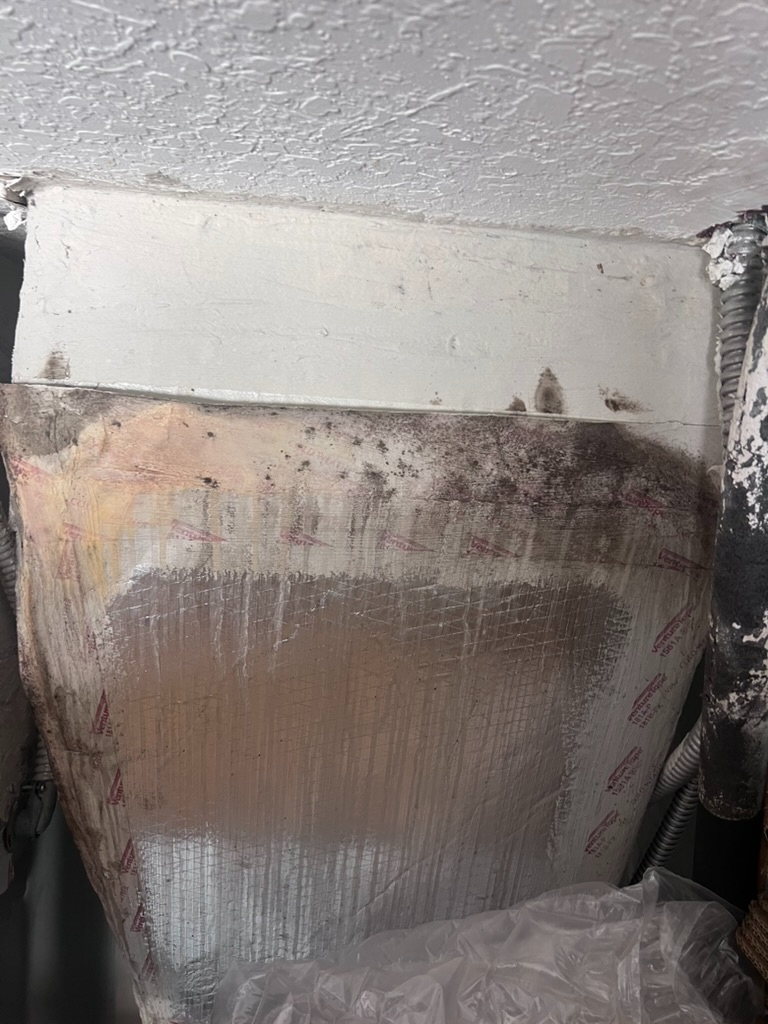
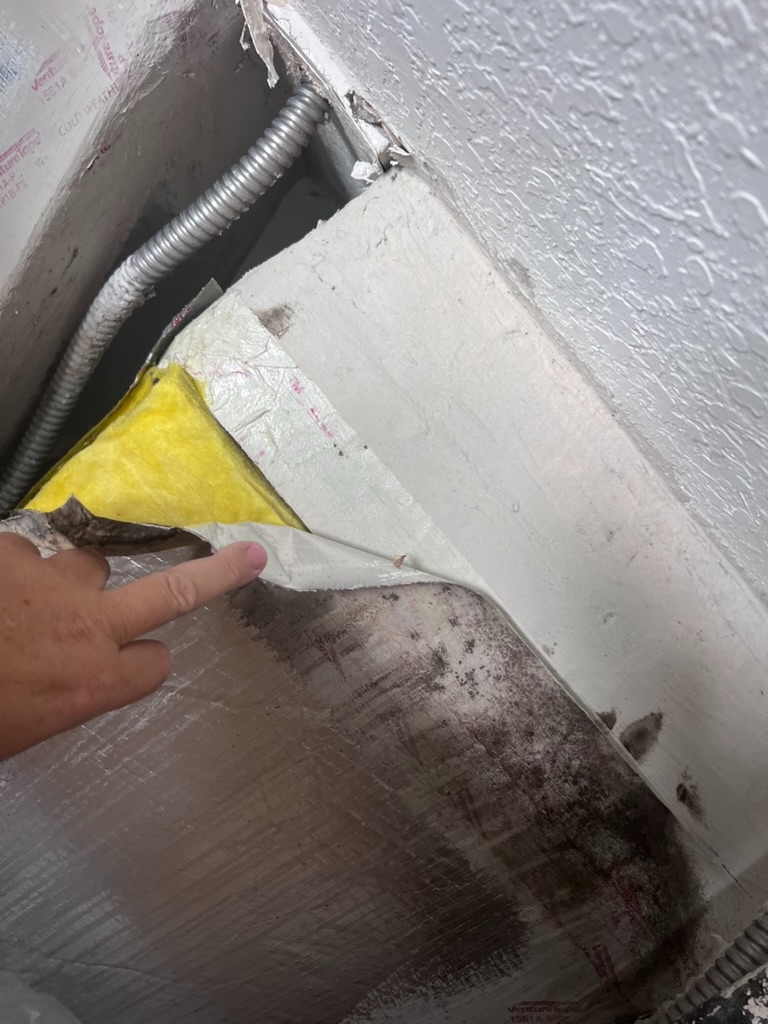
Evidence of contamination was also identified within portions of the connected duct system serving multiple rooms throughout the residence. Although the garage itself was not conditioned living space, the compromised plenum allowed contaminants from the garage environment to be distributed into the occupied areas of the home. One section of failed tape and separated seal was documented directly, with a visible gap exposing the yellow fiberglass insulation beneath the tape and mold growth clearly present just below the failure point.
Why This Happens
The tape commonly used to seal HVAC plenums is not intended to last indefinitely. As the adhesive ages, it can lose its bond and begin separating from the metal surfaces it was applied to. When the negative pressure created by the air handler during normal operation is factored in, these failed joints become active pathways for contaminants entering the HVAC system. In this case, that included mold spores, dust, fiberglass insulation particles, garage air contaminants, and elevated humidity, all of which are common byproducts of an attached garage environment. Once these contaminants enter the air handler, they can be distributed throughout the home's duct system every time the HVAC system operates, which explains why the homeowner continued to notice dust and odor issues even with regular filter changes.
Recommendations
Based on these findings, Home Enviro's report outlined a set of corrective recommendations to be carried out by a qualified HVAC contractor. These included removing and replacing all deteriorated HVAC tape and failed plenum seals, and properly resealing all plenum and duct connections using approved HVAC sealing materials. The report also recommended professional cleaning of the affected HVAC system and contaminated ductwork, along with HEPA vacuuming and cleaning of the air handler cabinet and accessible mechanical components. Any moisture conditions found to be contributing to microbial growth should be corrected as part of this work, and HVAC filters should be replaced following the system cleaning. Finally, Home Enviro recommended a post-remediation verification inspection once the corrective work has been completed, to independently confirm that the contamination has been properly addressed.
Conclusion
This investigation demonstrated how a relatively small mechanical failure, specifically the deterioration of HVAC plenum tape adhesive, can contribute to widespread contamination throughout a residence. Even without an active plumbing or roof leak, failed air sealing around an HVAC system can introduce mold spores and other airborne contaminants into the ductwork, affecting indoor air quality throughout the home. Early identification of deteriorated plenum seals, combined with proper HVAC maintenance and professional inspection, can help prevent contamination from spreading further through the mechanical system and reduce the likelihood of recurring indoor air quality concerns. For homeowners in Weston, Florida dealing with unexplained odors, dust, or vent staining, this case is a reminder that a mold in air handler condition, mold in garage HVAC unit, or mold in AC plenum problem can exist entirely out of sight, and that a proper HVAC mold inspection is often the only way to confirm whether contaminated ductwork is affecting a home's air quality.
Case Summary
Inspection Type: Residential HVAC Mold Inspection
Property Location: Weston, Florida
System Location: Air handling unit located in attached garage
Services Performed: Visual inspection, moisture assessment, thermal imaging, HVAC inspection, mold assessment, laboratory sampling (where appropriate)
Frequently Asked Questions
What causes mold in HVAC plenum tape?
The tape used to seal HVAC plenums relies on an adhesive bond that is not designed to last indefinitely. Over time, heat, humidity, and the normal vibration and operation of the air handler cause that adhesive to age, lose its grip, and separate from the metal cabinet or duct surface. Once the seal fails, gaps open around the plenum and duct connections, and if those gaps are near a garage or another unconditioned space, dust, fiberglass particles, and mold spores can be drawn directly into the airstream.
Can mold in an air handler affect the whole house?
Yes. An air handler is the central point through which all conditioned air passes before being distributed through the duct system to every room the system serves. If mold spores or other contaminants enter the cabinet through a failed seal, they can be picked up in the airstream and carried through the ductwork each time the system runs, which is exactly what this case documented.
How do I know if my HVAC system has mold contamination?
Common warning signs include a persistent musty odor, visible discoloration around supply vents or registers, recurring dust accumulation despite regular filter changes, and ongoing indoor air quality concerns that do not improve with routine maintenance. Confirming the condition typically requires a professional inspection with thermal imaging, moisture measurements, and direct examination of the air handler, plenum, and duct connections.
What is plenum tape and why does it fail?
Plenum tape is the sealing tape applied around the plenum and duct connections at an air handler to keep the system airtight. It fails because its adhesive is a consumable component rather than a permanent one, and age, elevated temperatures, humidity, and constant system operation all contribute to that adhesive breaking down over time.
Is HVAC mold inspection different from a home inspection?
Yes. A general home inspection typically involves a visual review of major systems without specialized diagnostic tools or mold sampling. An HVAC mold inspection is a focused assessment that includes moisture measurements, thermal imaging, and direct inspection of the air handler, plenum, and duct connections, along with mold sampling where appropriate, designed specifically to catch hidden contamination that a general inspection would not identify.
Home Enviro Serves South Florida and Weston, Florida Homeowners
Home Enviro is a licensed mold inspection and air quality testing firm serving South Florida, with Weston, Florida mold inspection services available for residential HVAC mold concerns like the one documented in this case. Florida mold assessor license MRSA675. If your home shows signs of mold in air conditioning system components, unexplained odors, or dust that returns despite regular filter changes, our team can perform a comprehensive HVAC mold inspection to identify the source. Call (954) 994-8847 to schedule an inspection.
Schedule Your HVAC Mold Inspection
Licensed mold inspectors serving South Florida and Weston, Florida homeowners with concerns about contaminated ductwork, garage-located air handlers, and hidden HVAC mold. Call today for same-week appointments.
Request an Inspection (954) 994-8847