Home Enviro performed a mold and moisture assessment at a Pompano Beach residence equipped with three separate HVAC systems. The investigation identified mold contamination associated with one of the three systems. Although the same condition was not identified in all three units, each HVAC system had concerns involving leaky air ducts and condensation within the cavity spaces surrounding the ductwork. Customer-identifying information and the property address have been omitted for privacy.
This distinction mattered. Cleaning only the visibly affected HVAC system would not have addressed the moisture conditions associated with the remaining duct systems. The inspection needed to evaluate the home as a group of connected mechanical and building assemblies rather than treating one air handler as the only concern.

Why the Assessment Was Needed
The residence had three air-conditioning systems serving different areas of the home. In a multi-system property, conditions can vary considerably from one zone to another. One area may maintain acceptable temperature and relative-humidity levels while another experiences air leakage, condensation, or elevated humidity.
The purpose of the assessment was to evaluate indoor environmental conditions, inspect the accessible HVAC-related areas, collect air samples, and determine whether the concerns were limited to one system or involved a broader moisture problem.
Inspection and Testing Methods
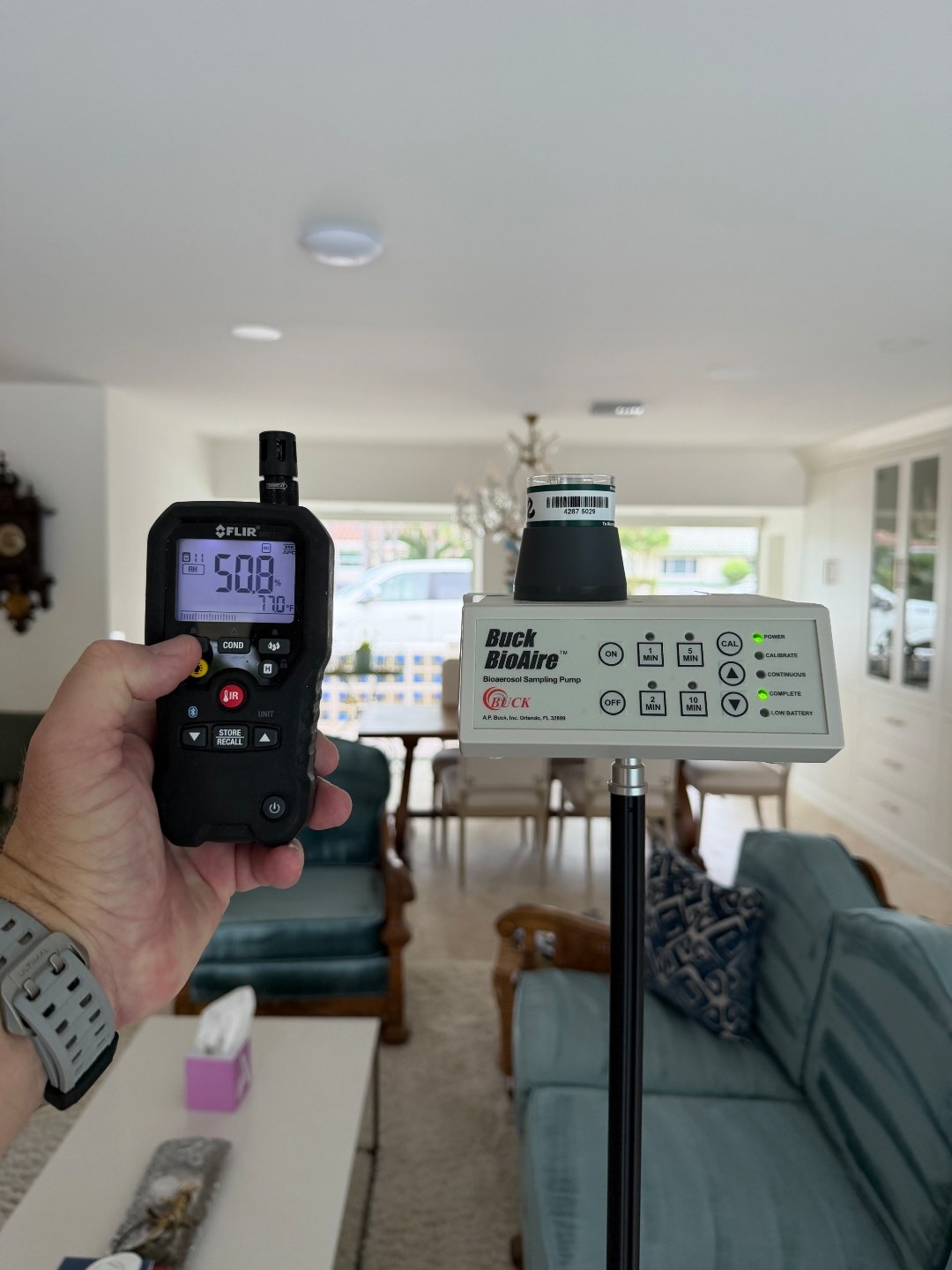
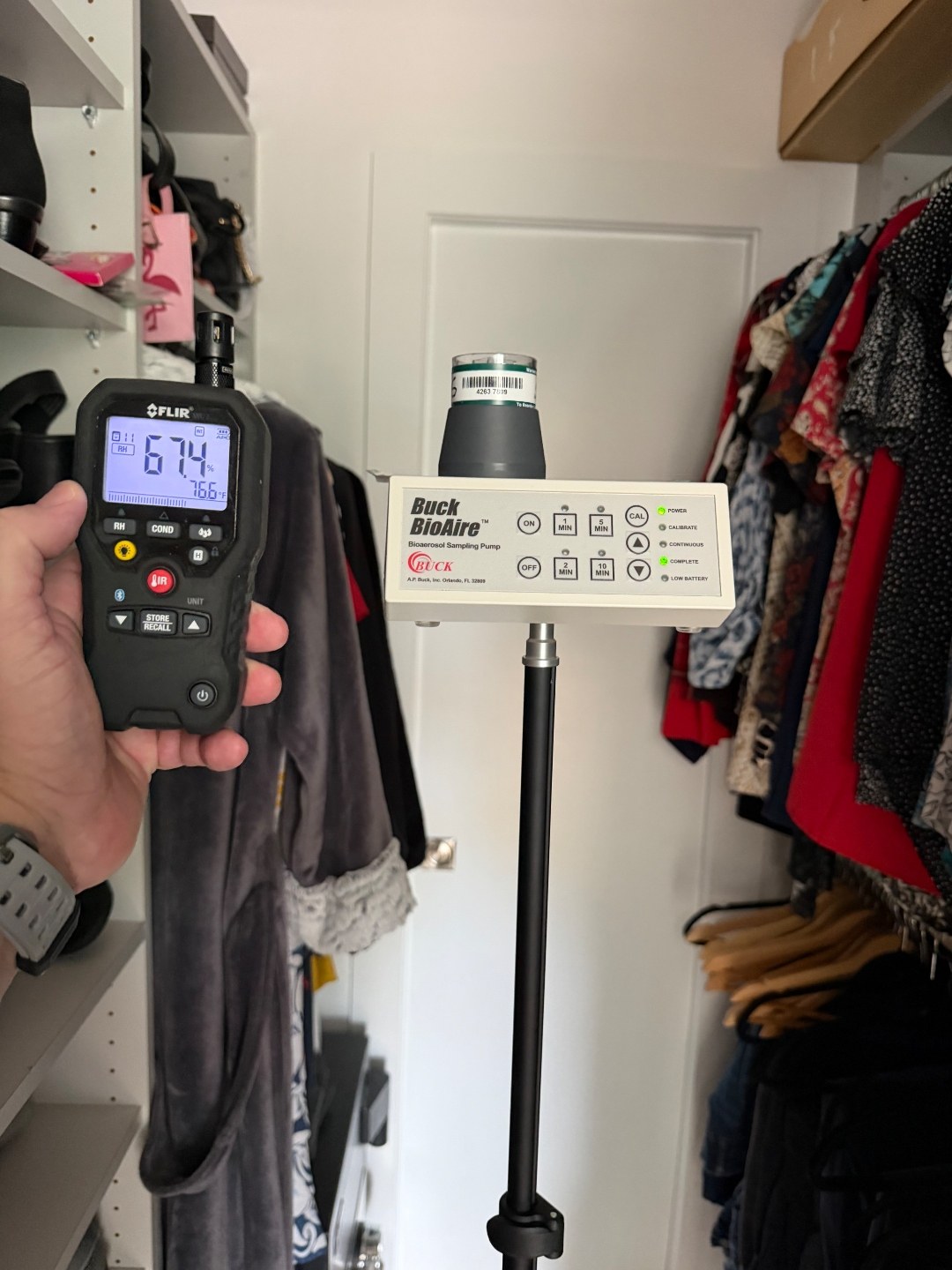
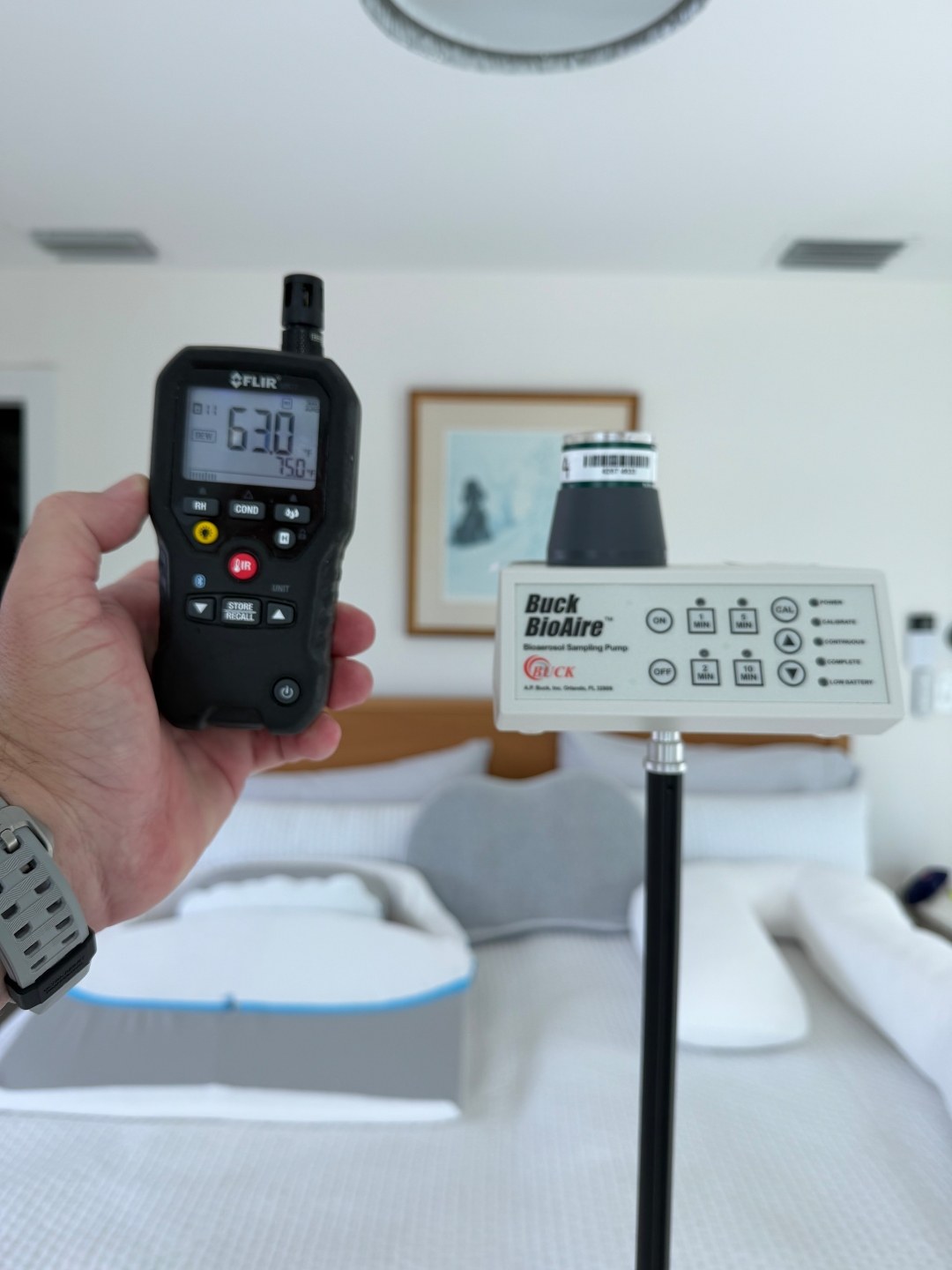
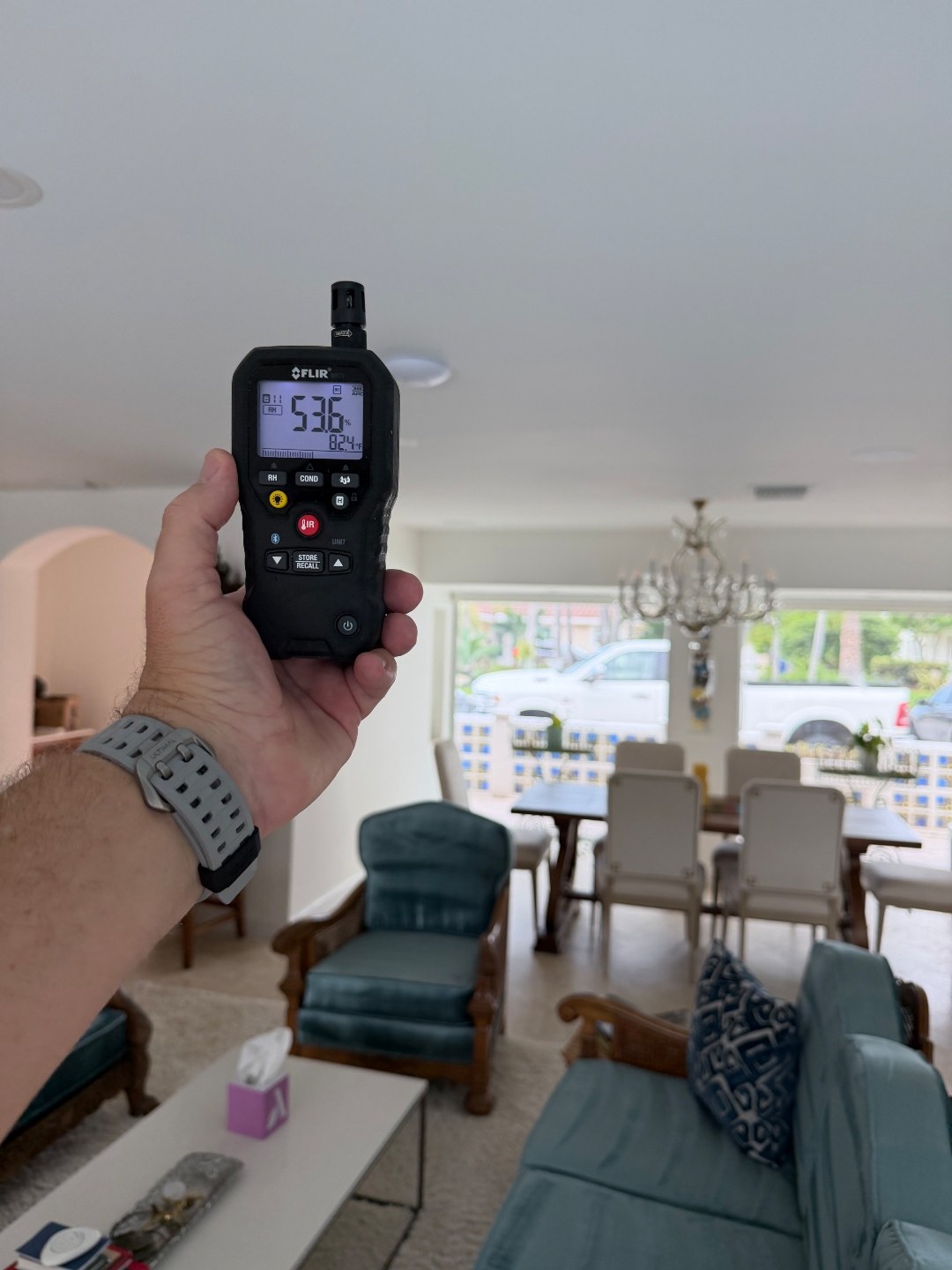
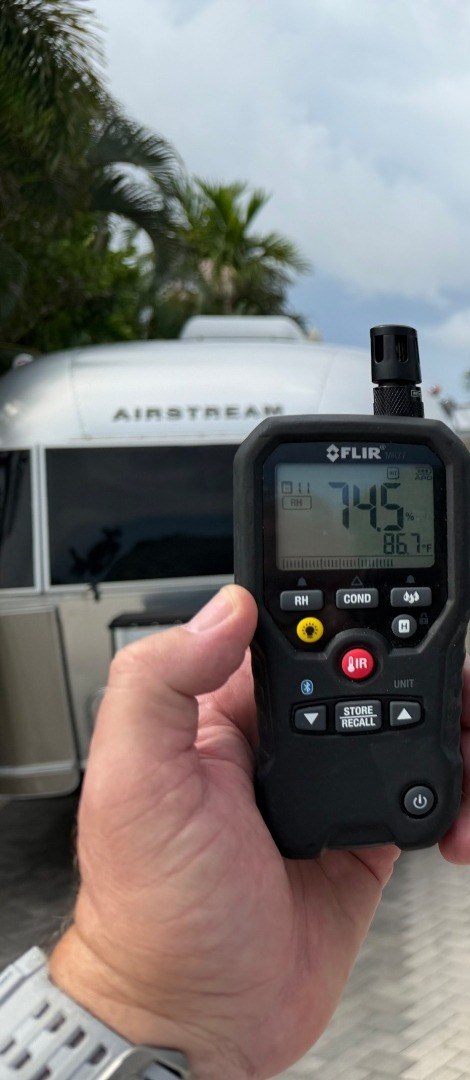
The assessment included air sampling in multiple interior locations and an outdoor reference sample. A Buck BioAire bioaerosol sampling pump was used to collect the air samples. Environmental conditions were documented with a FLIR meter, and photographed indoor relative-humidity readings ranged from approximately 50.8% to 67.4% in the sampled areas. The photographed outdoor reading was approximately 74.5% relative humidity.
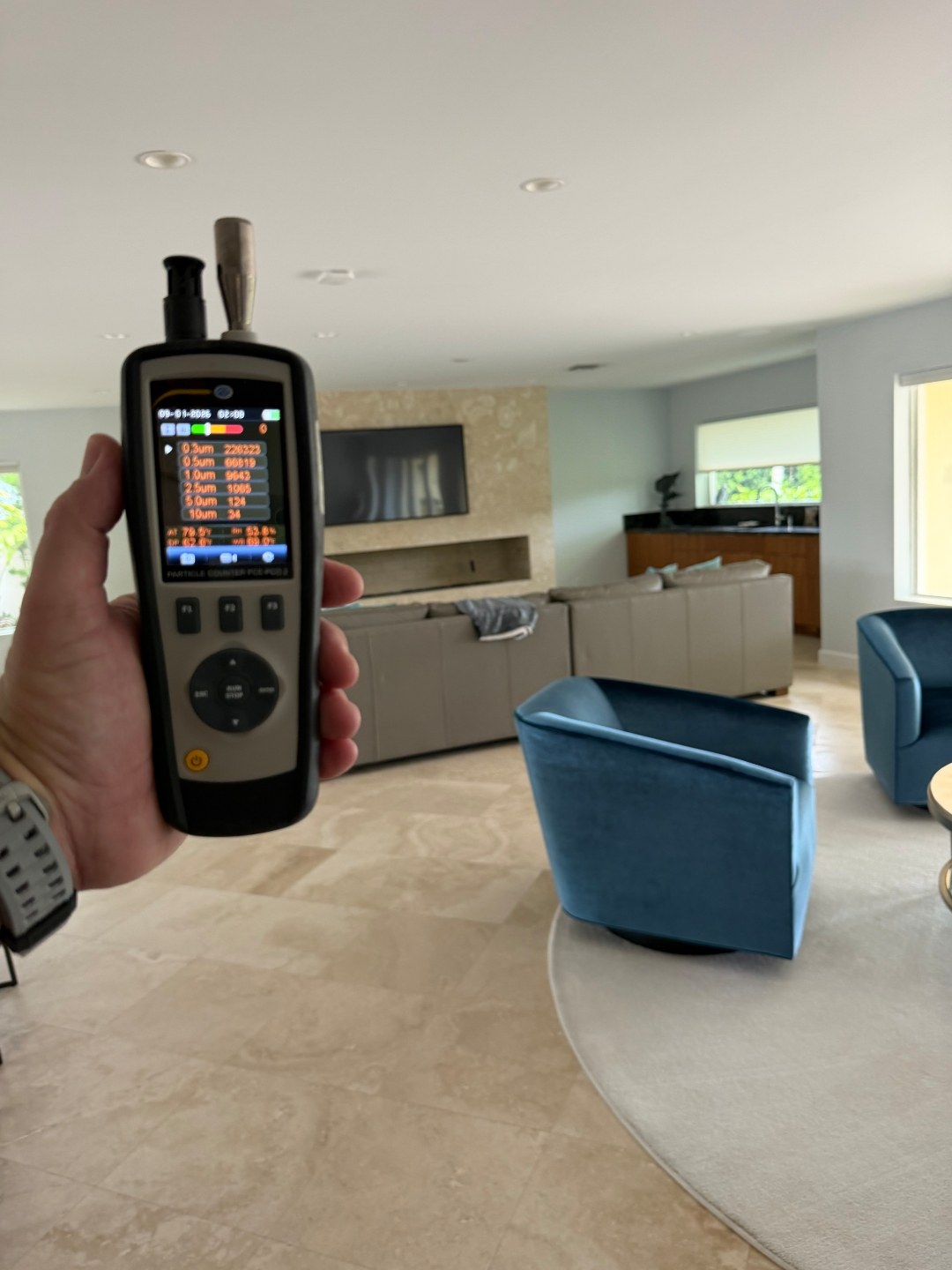
Particle measurements were also collected in the home. Particle readings can provide supporting information about airborne particulate conditions, but they do not identify mold and are not a substitute for laboratory analysis.
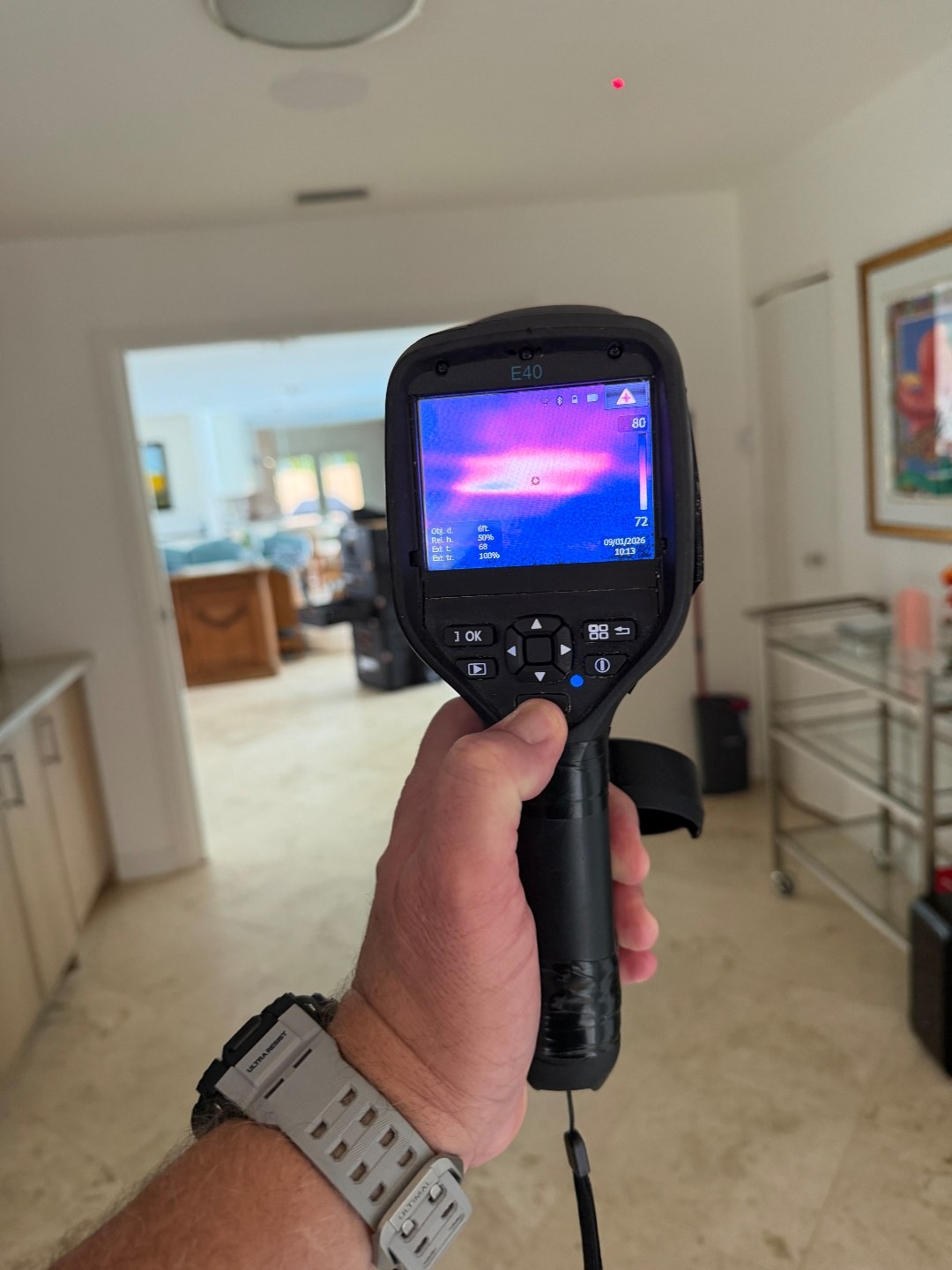
Thermal imaging was used at ceiling supply locations to identify temperature patterns associated with the operating HVAC systems. Thermal imaging shows surface-temperature differences. It does not independently prove that a material is wet or that mold is present, so thermal patterns must be interpreted together with visual observations, environmental readings, moisture measurements when applicable, and laboratory findings.
Findings Across the Three HVAC Systems
Mold contamination was identified in one of the three HVAC systems. No mold genus, species, or laboratory concentration is stated in this case study because the supporting laboratory report has not been included with the publication materials. The full laboratory report is not published here and was reviewed privately with the client.
The broader concern involved all three systems. Leaky ductwork allowed conditioned air to escape into surrounding cavity spaces. Cold air leaking from supply ducts can lower the temperature of nearby surfaces. When warm, humid air reaches those cooler surfaces, the surface temperature may fall near the dew point and condensation can develop.
This condition can remain concealed above ceilings or within duct chases. A finished ceiling may appear generally normal from the occupied space even while condensation is occurring around a duct connection, damaged insulation, or an inadequately sealed penetration.
The inspection findings indicated that the mold-contaminated system required attention, but the moisture mechanism affecting the ductwork also needed to be corrected. Without repairing the leakage and condensation conditions, cleaning the affected system alone would leave the contributing moisture problem unresolved.
Why Duct Leakage Can Cause Condensation in South Florida
South Florida homes operate air-conditioning systems for much of the year. Supply air and the exterior surfaces of HVAC components can be considerably cooler than the surrounding attic, chase, or cavity air.
Condensation becomes possible when humid air contacts a surface that is cold enough to reach the dew point. Conditions may be aggravated by separated duct connections, deteriorated sealing materials, damaged insulation, incomplete vapor barriers, openings between conditioned and unconditioned spaces, or air-pressure differences that draw humid air into a cavity.
The presence of three HVAC systems added another layer to the investigation. Each system serves a different zone, operates on a different schedule, and can create different pressure and temperature conditions. For that reason, the systems and their accessible distribution components were evaluated individually rather than assuming that one finding represented the entire house.
Professional Interpretation
The assessment established two related but separate concerns. One HVAC system had mold contamination that required appropriate corrective action. All three HVAC systems had duct leakage and condensation concerns affecting surrounding cavity spaces.
The contaminated system represented the immediate mold concern. The duct leakage represented a building performance and moisture control problem that could continue to create damp conditions if left uncorrected.
Air sampling represents conditions at the locations and time of collection. Results were interpreted together with the HVAC observations, environmental measurements, and thermal patterns, and the conditions found within accessible cavity areas. Air samples alone cannot determine the condition of every concealed section of ductwork or every enclosed ceiling cavity.
Case Summary
Inspection Type: Residential Multi-System HVAC Mold and Moisture Assessment
Property Location: Pompano Beach, Florida
Systems Evaluated: Three separate HVAC systems (specific system location not confirmed for publication)
Services Performed: Multi-location air sampling with outdoor reference sample, thermal imaging at ceiling supply locations, particle measurement, environmental humidity documentation
Findings: Mold contamination identified in one of three HVAC systems; duct leakage and condensation concerns identified in cavity spaces associated with all three systems
Outcome: Not confirmed for publication. Repair, remediation, and post-remediation verification status had not been confirmed at the time this case study was prepared.
Recommended Corrective Actions
Based on the documented conditions, the recommended next steps were to have qualified professionals address both the contamination and the moisture source:
- Evaluate the mold-contaminated HVAC system and its accessible components to establish the appropriate cleaning or remediation scope
- Inspect the air handler, evaporator coil area, blower compartment, supply and return plenums, accessible ducts, and nearby building materials associated with the contaminated system
- Have a licensed HVAC contractor evaluate all three duct systems for leakage, separated connections, damaged insulation, incomplete vapor barriers, and poorly sealed penetrations
- Seal verified duct leaks using materials and methods appropriate for the duct system
- Repair or replace damaged duct insulation and restore the exterior vapor barrier where needed
- Evaluate condensate pans, drain lines, and related drainage components for proper operation
- Inspect affected cavity materials for water staining, deterioration, or suspected microbial growth once appropriate access is available
- Correct communication between humid unconditioned spaces and air-conditioned cavities where identified
- Confirm that the three systems are operating and balancing correctly for their respective zones
- Consider independent post-remediation verification after the corrective work is complete, particularly where HVAC contamination or affected cavity materials are included in the remediation scope
HVAC repair, mold remediation, and post-remediation verification are separate functions. Home Enviro performs independent mold assessment and testing and does not perform mold remediation.
Why the Findings Mattered
The central lesson from this Pompano Beach project was that the most visible contamination did not represent the full extent of the underlying condition. One HVAC system had the mold finding, but leakage and condensation concerns were associated with all three duct systems.
A narrow response focused only on cleaning the contaminated unit could have missed the continuing moisture mechanism. Evaluating the HVAC systems, duct distribution, environmental conditions, and surrounding building cavities together provided a clearer direction for repairs and helped separate the confirmed mold concern from the conditions capable of supporting future growth.
Property owners with recurring condensation, staining around supply registers, musty odors, or suspected HVAC contamination may need more than a visual check of the air handler. An independent assessment can help identify which systems and areas require further investigation before cleaning or repairs begin.
Conclusion
Home Enviro provides independent mold assessment, air quality testing, moisture evaluation, thermal imaging, and HVAC-related inspection services throughout Pompano Beach and South Florida. Inspections are performed under Florida Mold Assessor License MRSA675. For homeowners with multiple HVAC systems who notice condensation, musty odors, or allergy symptoms tied to only part of the home, this case is a reminder that each system and its surrounding building cavities should be evaluated individually rather than assuming one finding represents the entire house.
Frequently Asked Questions
Can one HVAC system have mold while the others in the same home do not?
Yes. In a home with multiple HVAC systems, each system serves a different zone and can experience different conditions. In this Pompano Beach case, mold contamination was identified in one of three HVAC systems, while the other two systems did not show the same finding, even though all three had duct leakage and condensation concerns in their surrounding cavity spaces.
How can duct leakage cause condensation without a plumbing leak?
Leaky ductwork can allow conditioned air to escape into surrounding cavity spaces. Cold air leaking from supply ducts can lower the temperature of nearby surfaces. When warm, humid South Florida air reaches those cooler surfaces, the surface temperature can fall near the dew point and condensation can develop, entirely separate from any plumbing issue.
Does thermal imaging prove mold or moisture is present?
No. Thermal imaging shows surface temperature differences. It does not independently prove that a material is wet or that mold is present. Thermal patterns identified during this inspection were interpreted together with visual observations and environmental readings, not relied on alone.
Do particle counter measurements identify mold?
No. Particle measurements can provide supporting information about airborne particulate conditions, but they do not identify mold and are not a substitute for laboratory air sample analysis.
Why evaluate all three HVAC systems instead of only the one with mold?
Cleaning only the visibly affected system would not address the moisture conditions identified in the other two duct systems. Evaluating the home as a group of connected mechanical and building assemblies, rather than treating one air handler as the only concern, helps ensure the underlying moisture mechanism is corrected rather than just the visible contamination.
Related Services
- HVAC Mold Inspection — the multi-system HVAC and duct evaluation service performed in this case
- Air Quality Testing — the multi-location air sampling and outdoor reference sample service used in this assessment
- Mold Testing & Lab Analysis — laboratory air sample analysis used to help identify mold contamination
- PRV Clearance — independent post-remediation verification recommended once corrective work is complete
Home Enviro Serves South Florida and Pompano Beach Homeowners
Home Enviro is a licensed mold inspection and air quality testing firm serving South Florida, with mold and moisture assessment services available for Pompano Beach homeowners dealing with multi-system HVAC concerns like the one documented in this case. Florida mold assessor license MRSA675. If your home has more than one HVAC system and you notice condensation, musty odors, or allergy symptoms in only part of the home, our team can perform a comprehensive HVAC mold inspection to evaluate each system individually. Call (954) 994-8847 to schedule an inspection.
Schedule Your HVAC Mold Inspection
Licensed mold inspectors serving South Florida and Pompano Beach homeowners with concerns about multi-system HVAC duct leakage, condensation, and indoor air quality. Call today for same-week appointments.
Request an Inspection (954) 994-8847