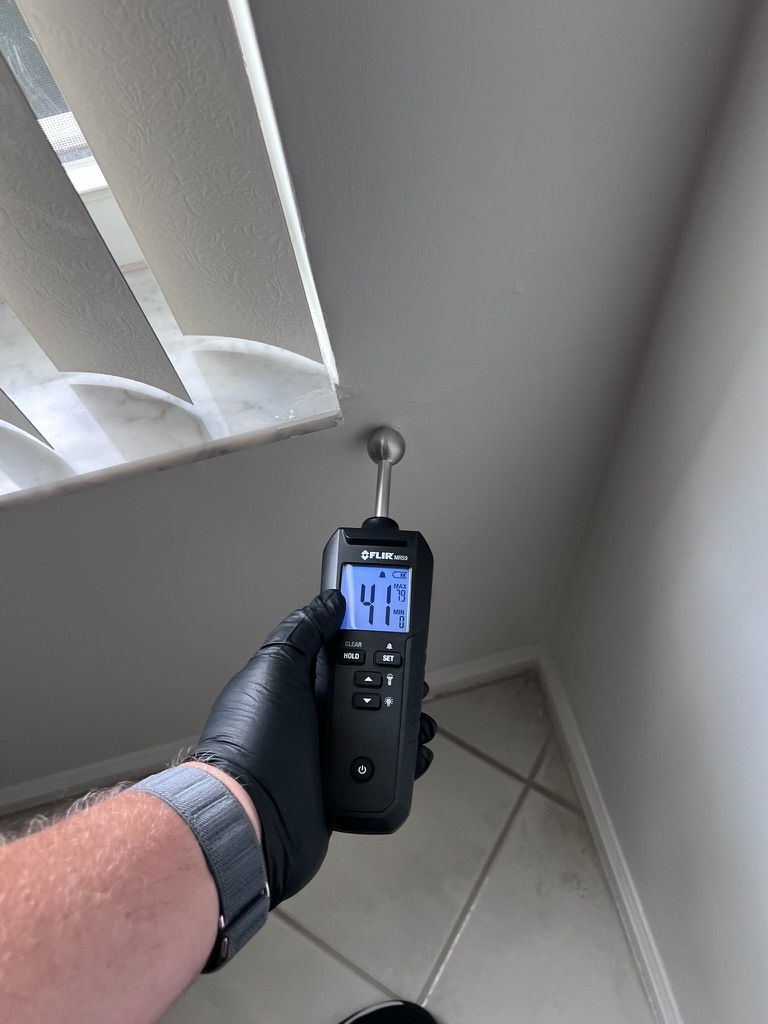
Pin and pinless digital moisture meters scan walls, floors, ceilings, and baseboards to find elevated moisture readings that indicate hidden water intrusion behind surfaces, before it becomes visible mold damage.
Moisture mapping is the systematic use of pin and pinless digital moisture meters to scan walls, floors, ceilings, and baseboards for elevated readings that indicate hidden water intrusion behind surfaces. Rather than relying on visual signs alone, moisture mapping documents actual moisture content in building materials, revealing problems well before staining, discoloration, or odor becomes noticeable.
A pin-type moisture meter uses two small probes inserted into a material to measure electrical resistance, giving a precise reading at a specific depth. A pinless moisture meter uses electromagnetic sensing pressed against a surface to scan larger areas quickly without puncturing the material. Home Enviro uses both, selecting the right tool depending on the material being tested and whether a non-invasive scan or a precise depth reading is needed.
Moisture can travel through wall cavities, under flooring, and behind baseboards well before it becomes visible. By the time a stain appears on a ceiling or a wall feels soft to the touch, moisture may have already been present for weeks or months, creating conditions favorable for mold growth. Moisture mapping catches these conditions early by measuring moisture content directly, rather than waiting for visible damage to appear.
This is especially important in South Florida, where high ambient humidity means building materials are more likely to retain elevated moisture levels for extended periods. A single moisture mapping session can establish a clear picture of which areas of a property are dry, which are elevated, and which require further investigation.
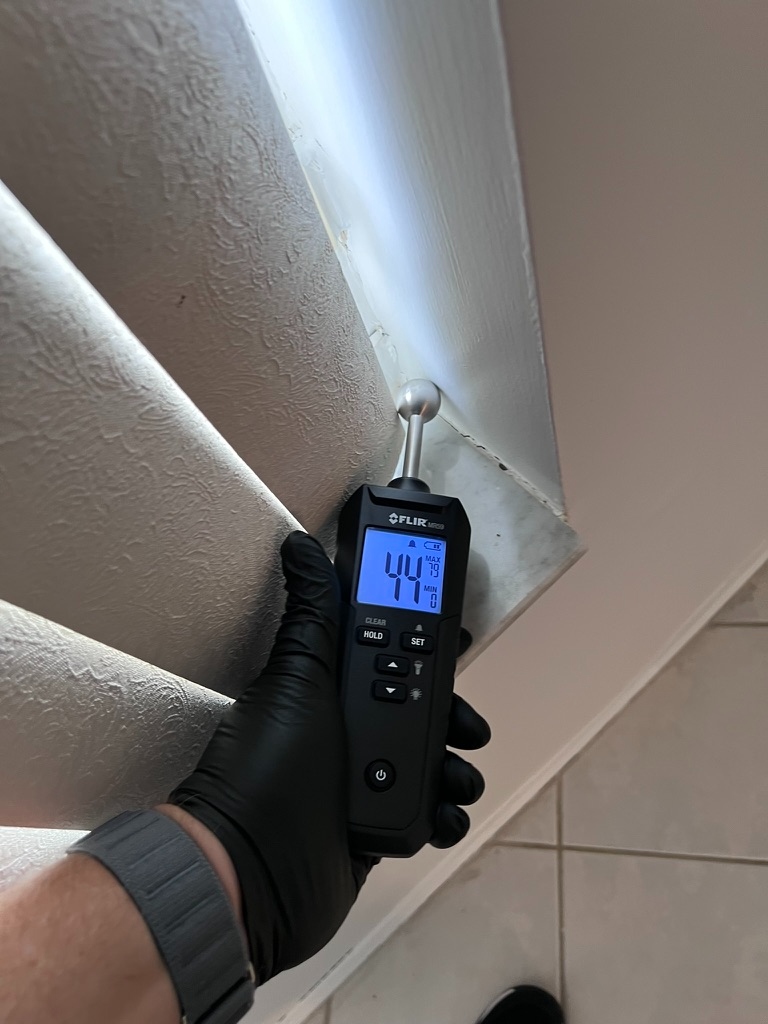
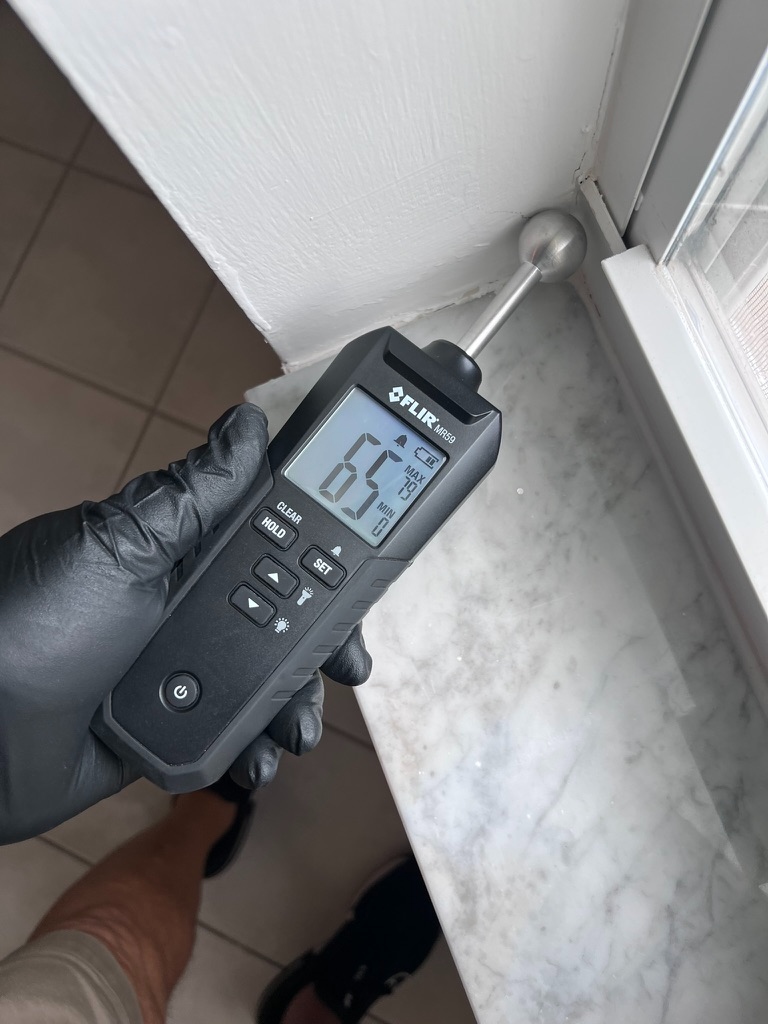
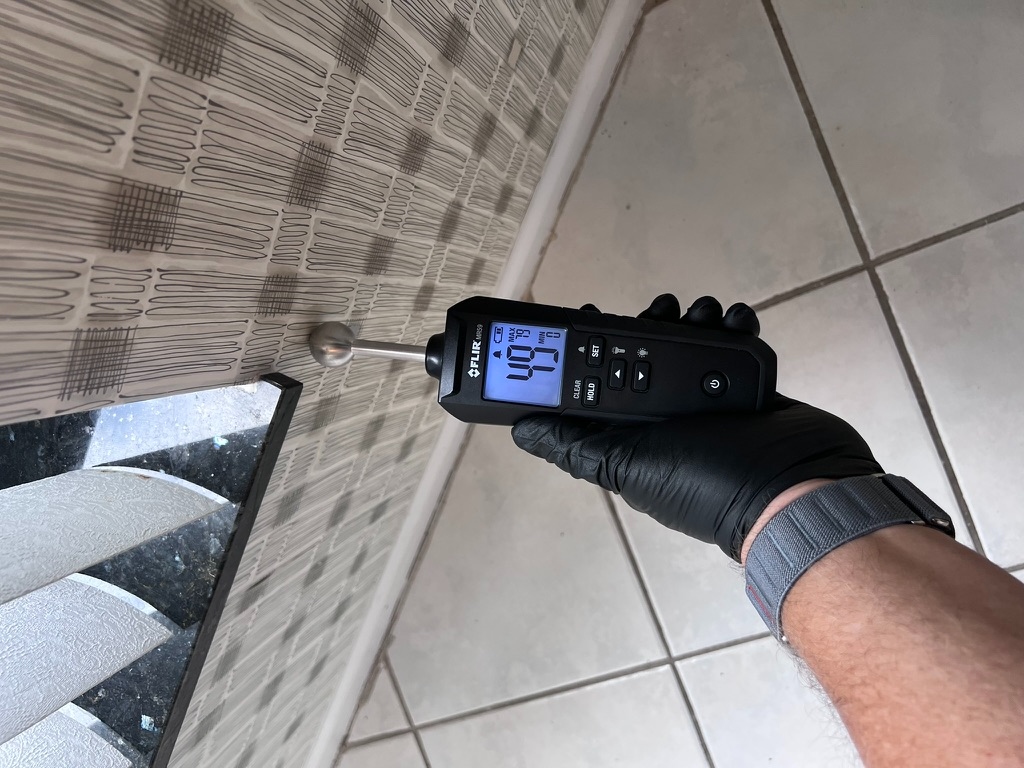
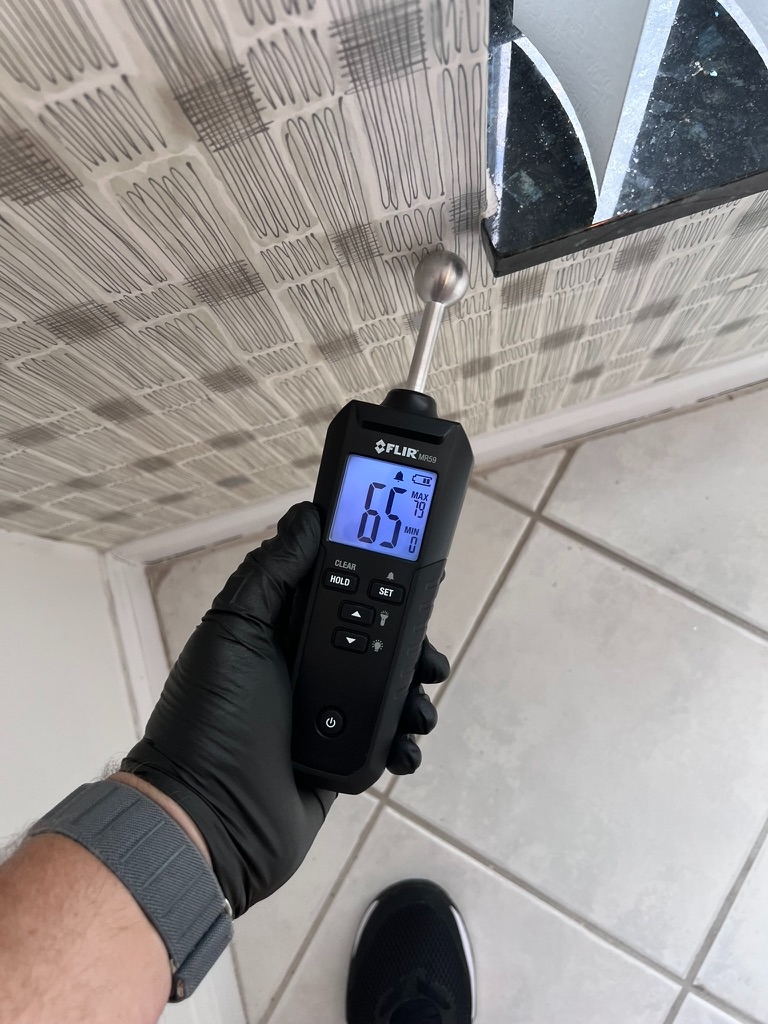
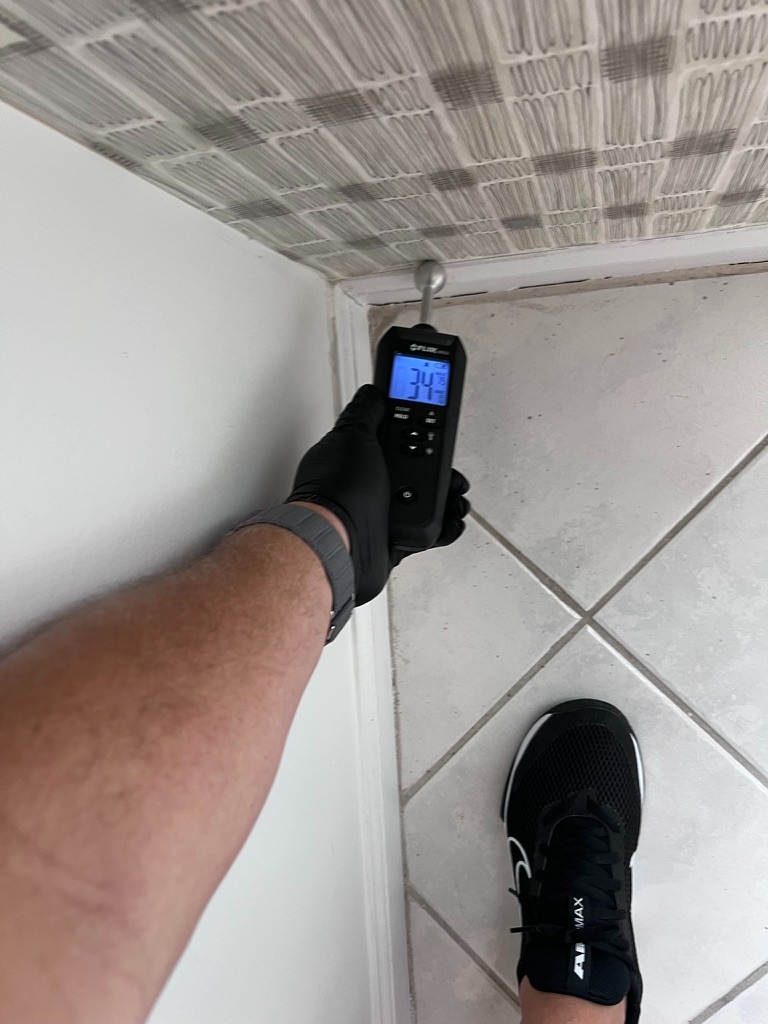
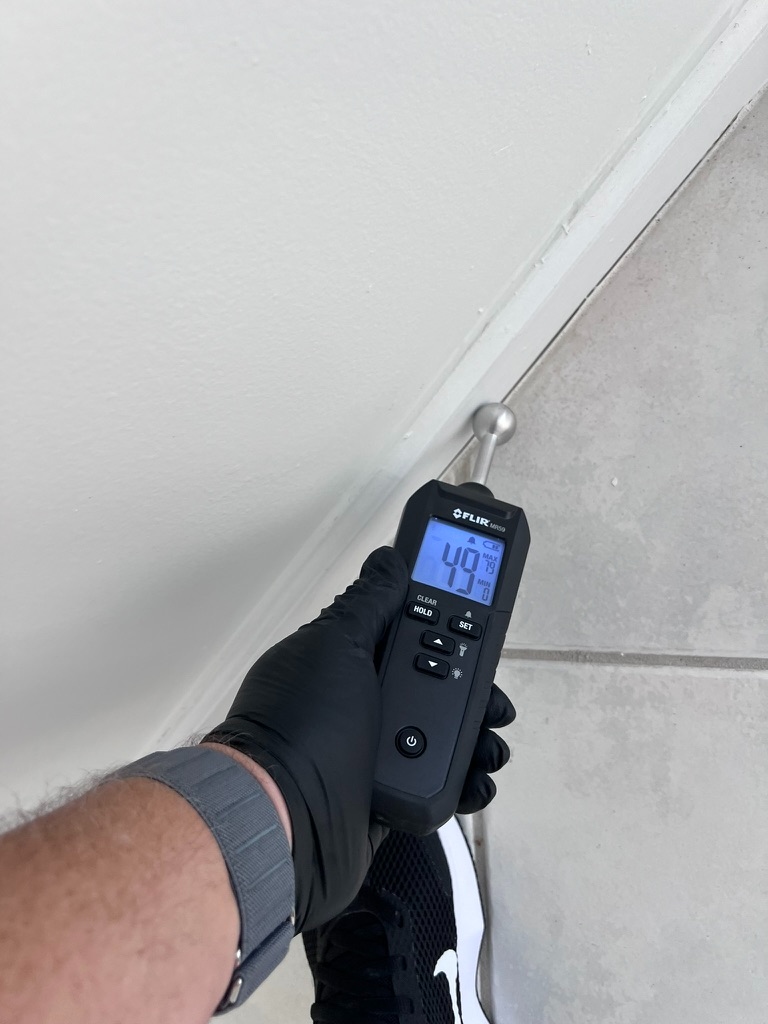
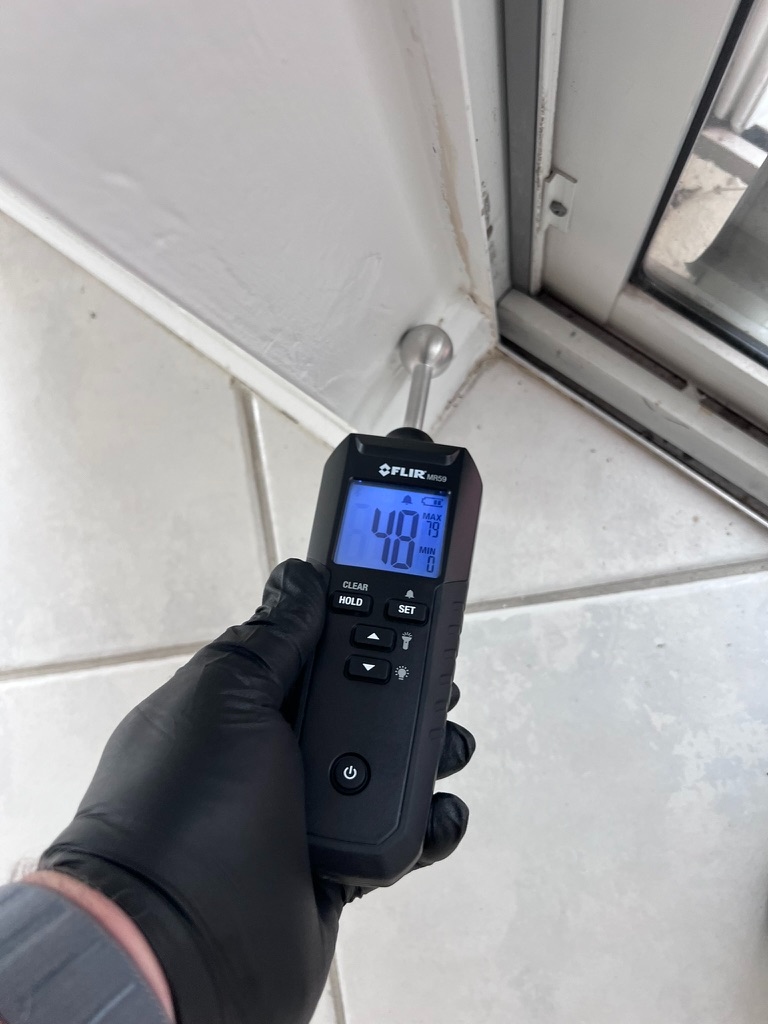
Real moisture meter readings from South Florida inspections, using calibrated FLIR moisture meters.
A thorough moisture mapping session covers every surface where hidden water intrusion commonly appears.
Thermal imaging identifies temperature anomalies that often indicate moisture behind a surface, but it does not measure moisture content directly. Moisture mapping confirms and quantifies what the thermal scan reveals, using calibrated meters at the exact locations flagged by the thermal camera. Used together, these two techniques give a documented, evidence-based picture of exactly where moisture is present and how severe the condition is.
Customized pricing based on property size. Call for a quote, or see the full Price List for all available services.
See the full Price List for all available packages and services.
Moisture mapping is the systematic use of pin and pinless digital moisture meters to scan walls, floors, ceilings, and baseboards, recording moisture readings across a property to identify and document elevated moisture levels that indicate hidden water intrusion.
A pin-type moisture meter uses two small probes inserted into a material to measure electrical resistance, giving a precise reading at a specific depth. A pinless moisture meter uses electromagnetic sensing pressed against a surface to scan larger areas quickly without puncturing the material. Home Enviro uses both, choosing the right tool depending on the material and whether a non-invasive scan or a precise depth reading is needed.
Yes. Moisture can travel through wall cavities, under flooring, and behind baseboards well before it becomes visible as staining or discoloration. Moisture mapping quantifies moisture content in these materials directly, often revealing elevated readings in areas that look completely normal to the eye.
Yes. Moisture mapping is a standard component of Home Enviro's full mold inspection process. It can also be performed as a standalone service when a specific area of concern, such as a suspected leak, recent water event, or musty odor, needs focused documentation.
Thermal imaging identifies temperature anomalies that often indicate moisture behind a surface, but it does not measure moisture content directly. Moisture mapping confirms and quantifies what the thermal scan reveals, using calibrated meters at the exact locations flagged by the thermal camera. The two techniques are most effective when used together.
Infrared cameras detect temperature anomalies behind walls and ceilings without any demolition, pinpointing where to focus moisture mapping. See the thermal imaging service →
Duct blaster testing and manometer readings find the pressure imbalance often responsible for the moisture found during mapping. See the assessment service →
A complete assessment of every area of your property, including thermal imaging, moisture mapping, and a full written report. See the full mold inspection service →
When elevated moisture is found, air and surface sampling determines whether mold contamination is already present. Learn about mold testing →
Same-day appointments available throughout Broward, Palm Beach, and Miami-Dade. Licensed, independent: Home Enviro inspects only, never remediates.
← Back to Pricing & Packages