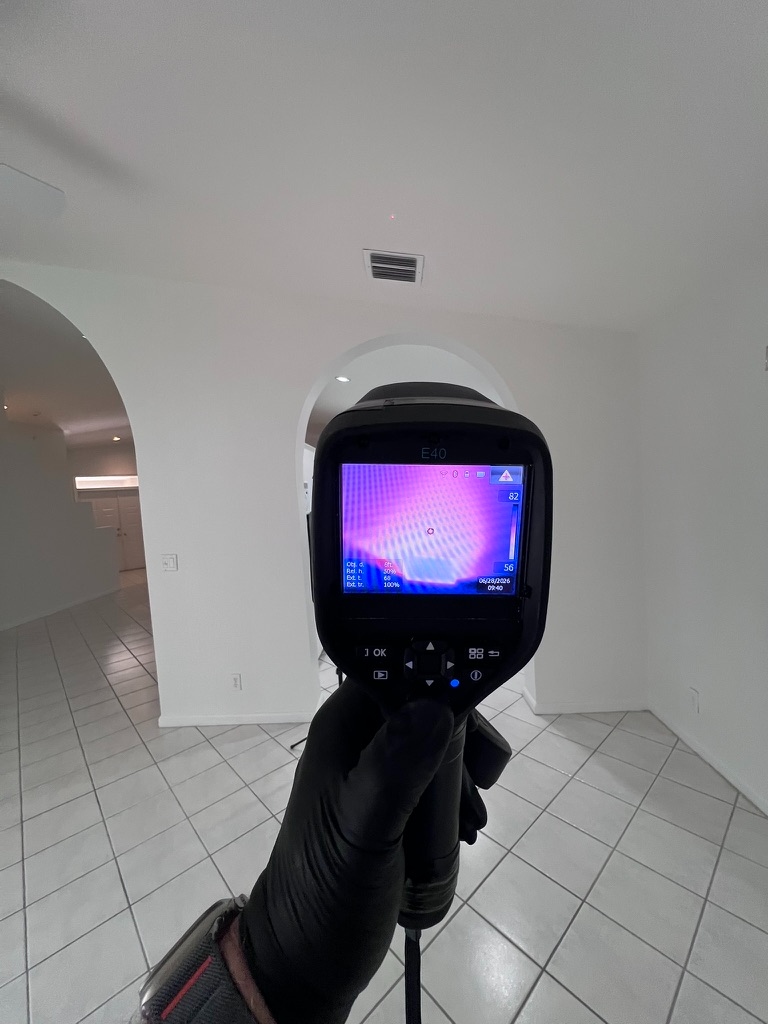
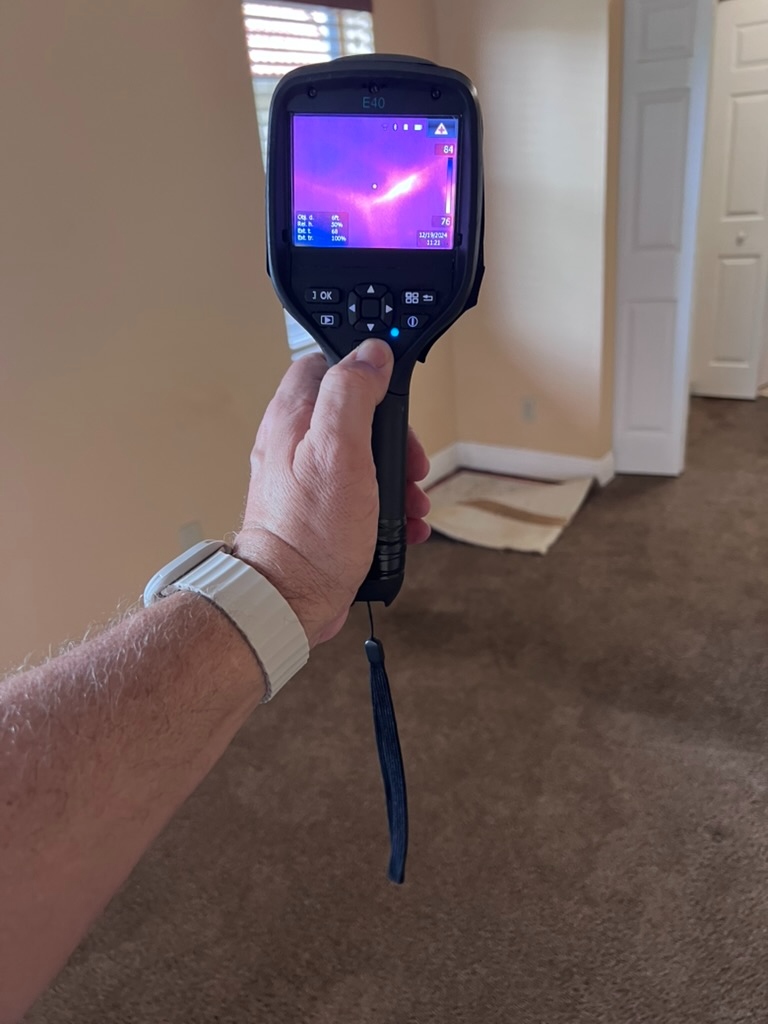
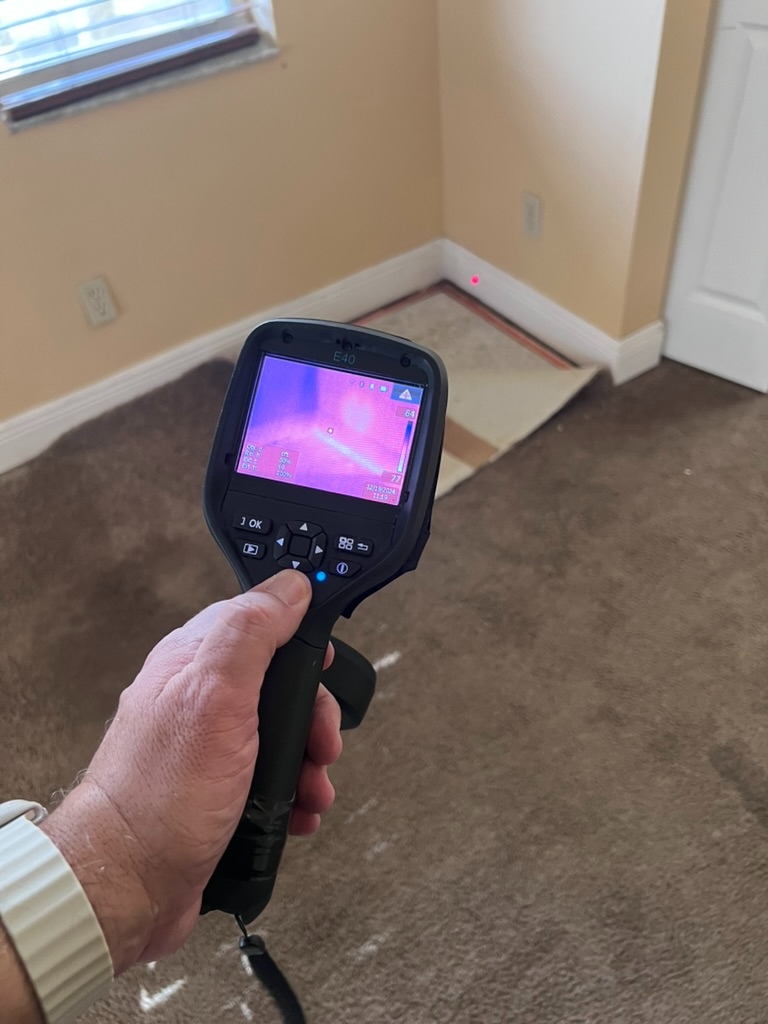
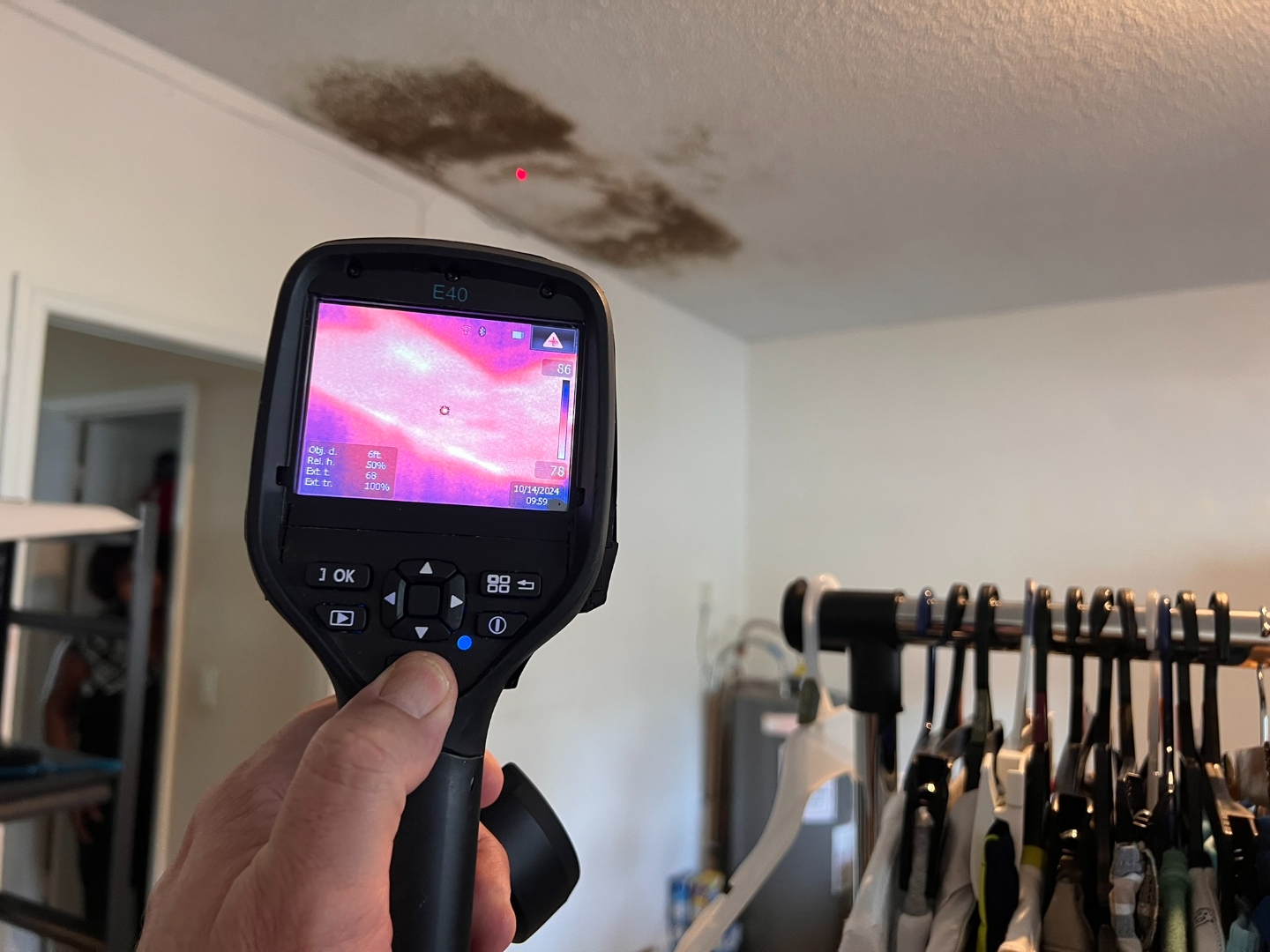
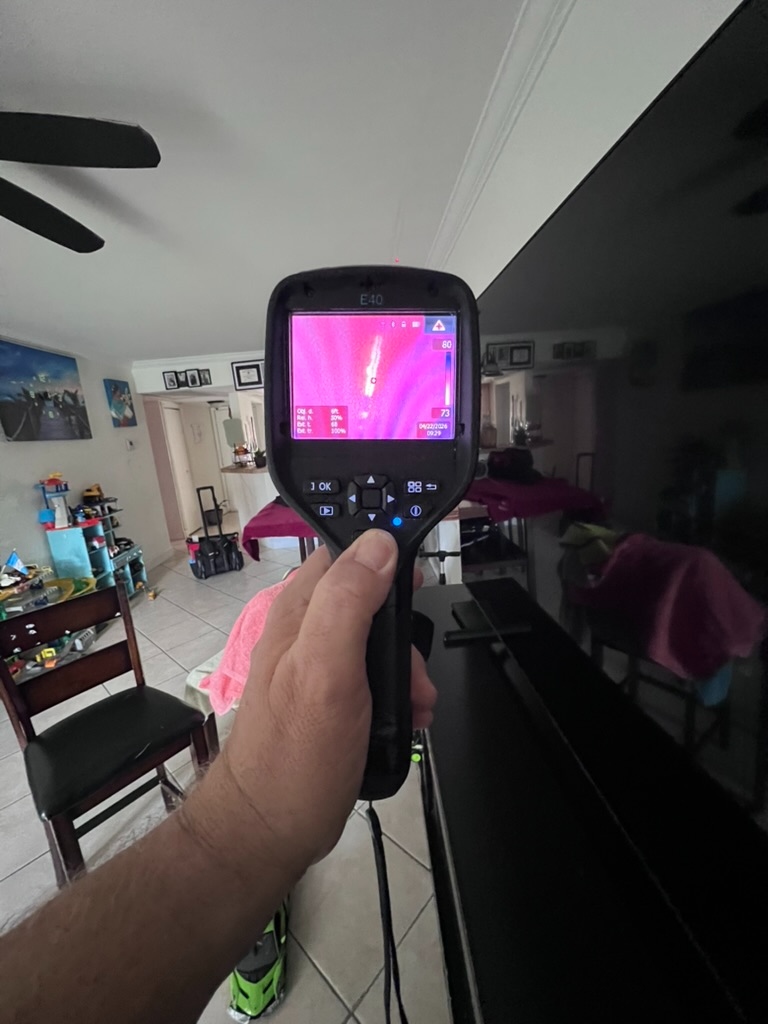
Infrared thermal imaging cameras detect temperature anomalies behind walls, ceilings, and floors without any demolition, revealing hidden moisture pockets invisible to the naked eye.
An infrared thermal imaging camera detects temperature anomalies behind walls and ceilings without demolition, revealing hidden moisture pockets invisible to the naked eye. Wet building materials typically hold a different surface temperature than dry surrounding materials because of evaporative cooling and differences in thermal mass, so a thermal camera can reveal exactly where moisture may be trapped behind a finished surface.
Because it works entirely from the surface, without drilling, cutting, or opening walls, thermal imaging is one of the fastest and least invasive ways to screen an entire property for potential hidden moisture before deciding where more detailed testing is warranted.
Thermal imaging identifies temperature anomalies that are often associated with moisture, but it does not see mold directly, and a temperature difference can occasionally have other causes, such as a gap in insulation, an air leak, or a structural framing member. For this reason, a professional thermal imaging inspection never stops at the thermal scan alone.
Every anomaly identified by the thermal camera is followed up with a moisture meter reading at that exact location to confirm whether elevated moisture is actually present. When contamination is suspected, air or surface sampling can then determine whether mold growth has developed. This layered approach turns a quick visual anomaly into a confirmed, documented finding.
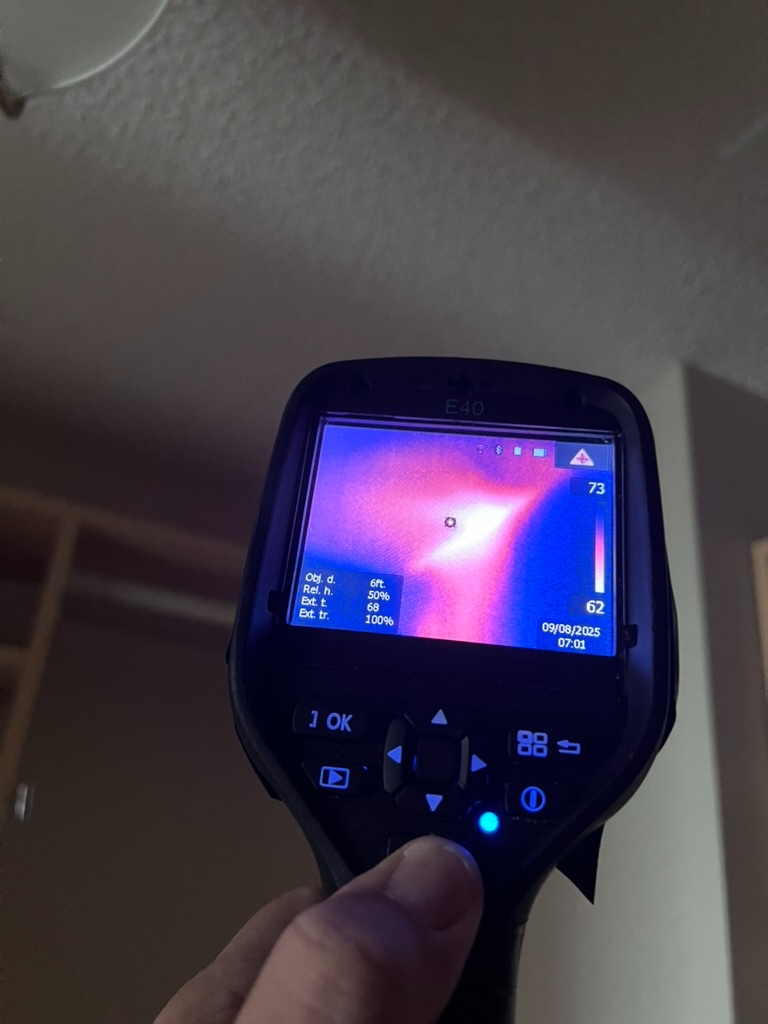
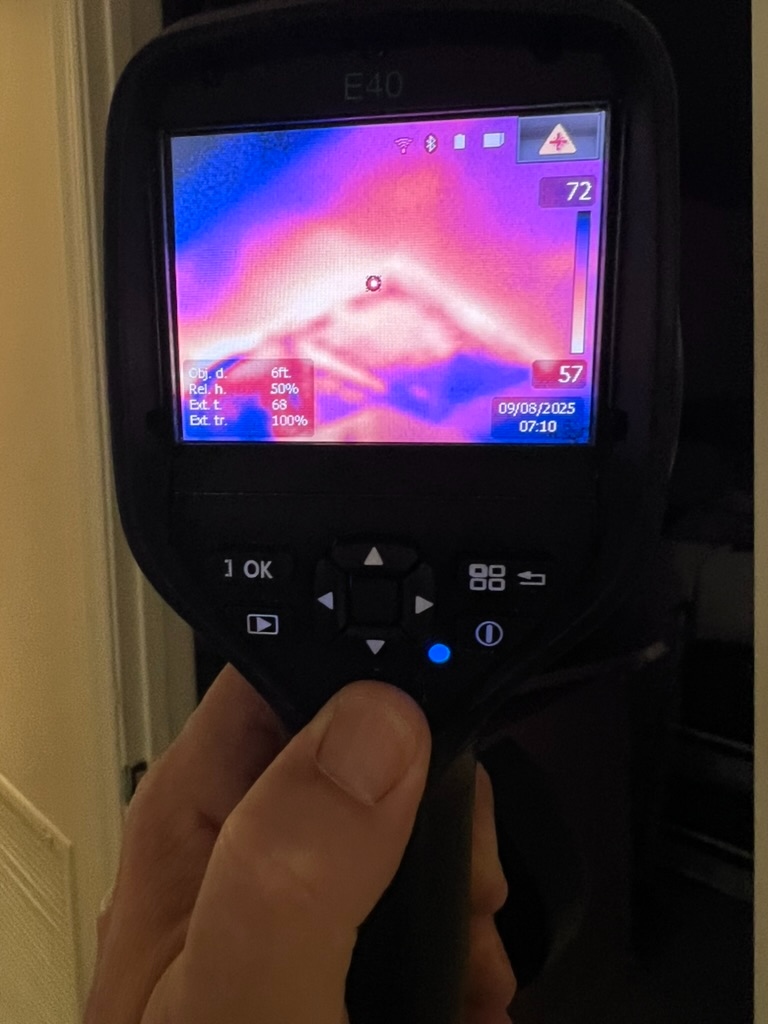
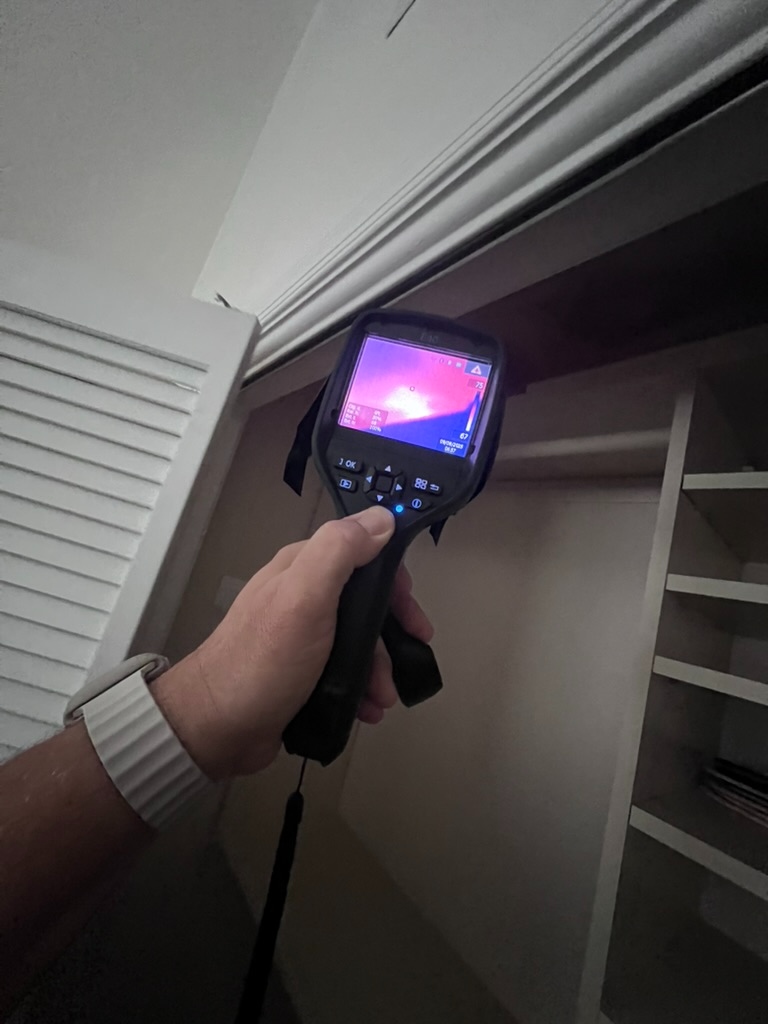
Real FLIR thermal camera readings from South Florida inspections, using calibrated infrared imaging equipment.
Thermal imaging is especially valuable for screening large areas quickly and non-invasively.
Thermal imaging tells us where to look. Moisture mapping tells us what is actually there. Every anomaly flagged during a thermal scan is confirmed with a calibrated pin or pinless moisture meter at that exact location, turning a visual temperature difference into a documented, quantified moisture reading.
An infrared thermal imaging camera detects surface temperature differences. Wet building materials typically hold a different temperature than dry surrounding materials because of evaporative cooling and differences in thermal mass, so a thermal camera can reveal a temperature anomaly at the exact location of trapped moisture behind a wall, ceiling, or floor, without any demolition.
No. Thermal imaging identifies temperature anomalies that are often associated with moisture, but it cannot see mold directly and a temperature difference can have causes other than moisture, such as insulation gaps or air leakage. Thermal imaging findings are always confirmed with a moisture meter and, when appropriate, laboratory air or surface sampling.
No. Thermal imaging is completely non-invasive. The camera captures an infrared image of the surface from a normal viewing distance, requiring no demolition, drilling, or cutting. This makes it an ideal first step before deciding whether more invasive testing is warranted.
Home Enviro uses professional-grade FLIR thermal imaging cameras, the same class of equipment used across the building science and home inspection industry, capable of detecting subtle temperature differences of a fraction of a degree.
Yes, conditions can affect results. Significant temperature swings between day and night, direct sunlight on exterior walls, or recent HVAC cycling can all influence surface temperatures. An experienced inspector accounts for these factors when interpreting thermal images and timing the scan appropriately.
Pin and pinless digital moisture meters confirm and quantify what a thermal scan reveals at the exact locations flagged. See the moisture mapping service →
Duct blaster testing and manometer readings find the pressure imbalance often responsible for the anomalies found during a thermal scan. See the assessment service →
A complete assessment of every area of your property, including thermal imaging, moisture mapping, and a full written report. See the full mold inspection service →
Thermal imaging is used alongside borescope duct inspection to detect hidden contamination inside HVAC systems. See the HVAC mold inspection service →
Same-day appointments available throughout Broward, Palm Beach, and Miami-Dade. Licensed, independent — Home Enviro inspects only, never remediates.