Home Buyer's Mold
Inspection Checklist
The complete, evergreen guide for South Florida home buyers, room-by-room red flags, a decision flowchart, printable checklists, cost tables, and a seasonal moisture risk calendar, built from 4,000+ real inspections by a licensed mold assessor.
Why Every South Florida Home Buyer Needs This Checklist
Buying a home is one of the largest financial decisions most people ever make, and in South Florida, mold and hidden moisture intrusion are two of the most common, and most expensive, surprises that surface after closing. Our climate combines year-round humidity, intense tropical rain events, hurricane exposure, and a naturally high water table. Those four factors together create conditions that are close to ideal for mold growth, and they do not take a season off the way they might in a northern state.
The problem for home buyers is that mold rarely announces itself clearly. A property can look freshly painted, professionally staged, and completely move-in ready while still hiding significant moisture damage behind a wall, under a floor, or inside an HVAC system. Sellers are not always aware of the problem themselves, and in some cases cosmetic repairs are made specifically to mask evidence of a past leak rather than to fix the underlying cause. This is why relying on a visual walkthrough alone, even a careful one, is not enough to protect your investment.
This checklist was built by Home Enviro, a Florida State Licensed Mold Assessor (License MRSA675) with more than 20 years of combined experience and over 4,000 completed inspections throughout Broward, Palm Beach, and Miami-Dade Counties. It reflects the actual patterns our licensed assessors see most often during real pre-purchase inspections, not generic advice pulled from a checklist template. Use it during your property tours, your due diligence period, and as a guide for the conversations you have with your real estate agent, attorney, and the seller.
Important: This checklist helps you identify red flags with your own eyes and ask better questions. It is not a substitute for a licensed mold inspection. Many of the most serious mold problems (inside wall cavities, above ceiling tiles, inside ductwork, and under flooring) are completely invisible without thermal imaging, calibrated moisture meters, and accredited laboratory sampling. If you notice any of the warning signs below, that is your signal to schedule a professional mold inspection before you close.
Table of Contents
- Meet Your Inspector
- Why South Florida Homes Are High Risk for Mold
- Home Buyer's Mold Inspection Decision Flowchart
- South Florida Seasonal Moisture Risk Calendar
- Indoor Humidity Risk Table
- Kitchens & Bathrooms
- Windows, Doors & Wall Surfaces
- Attic & Roof
- HVAC & Ductwork
- Slab, Crawlspace & Exterior
- Garage, Laundry & Utility Areas
- Printable Red Flags Table
- Questions to Ask the Seller or Listing Agent
- Understanding Florida Seller Disclosure Requirements
- Professional Inspection vs. DIY Checklist
- What Happens During a Professional Inspection
- Pre-Purchase Mold Inspection Cost Table
- When to Schedule During Your Purchase Timeline
- What to Do If Mold Is Found Before Closing
- Printable Room-by-Room Checklist
- Questions to Ask Before Closing (One-Page Printable)
- Frequently Asked Questions
Meet Your Inspector
Jeff leads inspections throughout Broward, Palm Beach, and Miami-Dade Counties, combining visual assessment, thermal imaging, and moisture mapping on every property. This checklist draws directly on the patterns his team encounters most often in real South Florida homes, from HVAC contamination to hidden slab moisture.
Why South Florida Homes Are High Risk for Mold
Unlike northern states where cold winters slow or stop mold growth for several months a year, South Florida has effectively no off-season. Indoor relative humidity frequently spikes above 60%, the threshold at which mold colonies establish and spread rapidly, and average temperatures sit in the 77°F to 86°F range for most of the year, which happens to be the exact range mold thrives in.
Add to that the region's exposure to wind-driven rain and tropical storms, which force water through window seals, roof penetrations, and stucco cracks that would never be tested in a drier climate. The region's high water table also pushes ground moisture upward through concrete slabs and into subfloor assemblies, so homes without a proper vapor barrier can stay damp continuously, sometimes for years, without producing an odor or visible discoloration that a homeowner would notice.
| Risk Factor | Why It Matters for Buyers |
|---|---|
| Chronic humidity above 60% | Creates a constant growth environment for airborne mold spores that are always present in outdoor air. |
| Building enclosure leaks | Wind-driven rain and tropical storms force water through window seals, roof penetrations, and stucco cracks. |
| Consistent warmth (77 to 86°F) | South Florida's year-round temperature range is squarely inside mold's ideal growing range. |
| Nutrient-rich building materials | Drywall paper, wood trim, and cabinet backing all contain cellulose that feeds mold colonies once moisture is present. |
| AC and ventilation issues | Oversized systems, clogged condensate lines, and poor airflow in closets create hidden moisture pockets. |
| High water table & slab moisture | Ground moisture migrates upward through concrete without a proper vapor barrier, staying damp for years silently. |
Home Buyer's Mold Inspection Decision Flowchart
Not sure whether a property needs a full professional inspection? Walk through this decision flow after each showing to decide your next step.
Schedule a professional pre-purchase mold inspection with thermal imaging, moisture mapping, and lab testing before your inspection contingency deadline. Use the findings to negotiate repairs, a credit, or exit the contract.
Proceed with your standard home inspection, but strongly consider a baseline mold inspection anyway if the home was vacant, is an older property, or this is a high-value purchase, many issues are invisible without instruments.
South Florida Seasonal Moisture Risk Calendar
Mold risk in South Florida shifts throughout the year based on rainfall, storm activity, and humidity patterns. If you are touring homes during a higher-risk month, treat this checklist with extra attention.
This calendar reflects general seasonal patterns for the Tri-County region (Broward, Palm Beach, and Miami-Dade) and is not a substitute for a property-specific inspection.
Indoor Humidity Risk Table
If you bring a portable hygrometer to a showing (an inexpensive and worthwhile tool), use this table to interpret the reading based on ASHRAE Standard 55 and EPA indoor air quality guidelines.
| Indoor Relative Humidity | Risk Level | What It Means |
|---|---|---|
| Below 40% | Low | Very low mold risk, though extremely dry air can cause other comfort issues. |
| 40%, 45% | Target Range | Ideal indoor humidity range recommended by ASHRAE and EPA guidelines. |
| 50%, 55% | Marginal | Worth monitoring; sustained readings in this range over time can support mold growth. |
| 60% and above | Critical | The threshold at which mold colonies establish and spread rapidly. Treat as a red flag. |
Source: ASHRAE Standard 55 and EPA indoor air quality guidelines, as referenced in Home Enviro's indoor air quality testing program.
Kitchens & Bathrooms
Kitchens and bathrooms have the highest concentration of plumbing connections in any home, which makes them the single most common source of hidden mold problems our inspectors encounter. A slow, pinhole leak under a sink or behind a toilet supply line can saturate subfloor material for months before any visible sign appears on a painted surface.
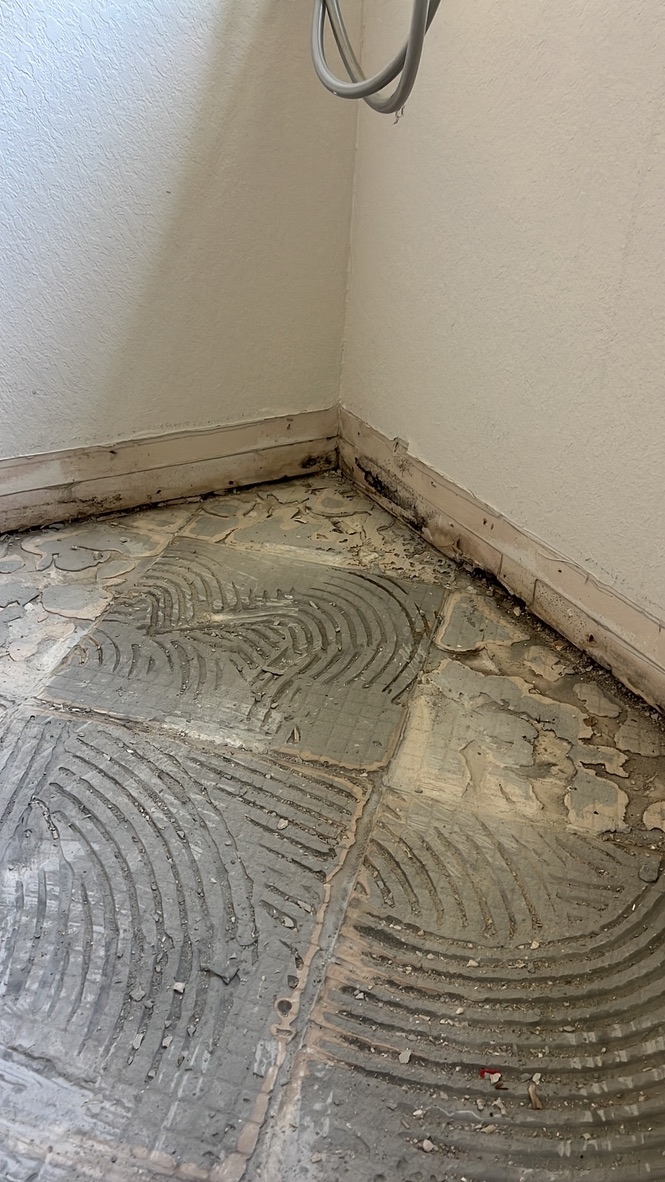
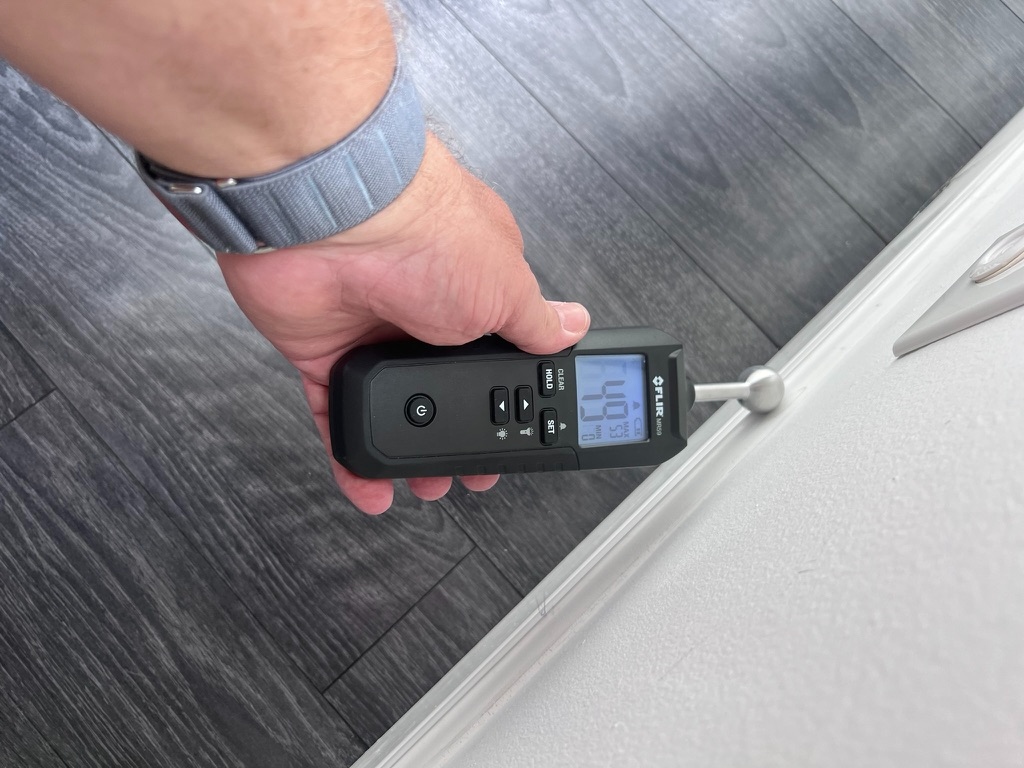
During pre-purchase inspections throughout South Florida, we frequently find soft or discolored subfloor material near bathroom fixtures that looks completely normal from the surface. A moisture meter reading against the baseboard, taken in seconds, often tells us more than a visual walkthrough ever could.
- Check under every sink for staining, softened wood, or a musty smell around supply lines and P-traps.
- Inspect grout and caulk lines around tubs and showers for discoloration, gaps, or soft spots in the surrounding drywall.
- Press gently on the flooring around toilets and tubs, sponginess suggests subfloor water damage that has been developing for some time.
- Confirm bathroom exhaust fans vent to the exterior, not just into the attic space, which simply relocates the humidity problem.
- Open cabinet doors under sinks fully and check the back panel, not just the visible front, for staining.
- Note any fresh paint or new caulk in these rooms only, a common way sellers mask recent leak repairs without addressing the underlying cause.
- Check the caulking around the base of the toilet and behind the washing machine hookups if laundry is nearby.
Windows, Doors & Wall Surfaces
Window and door seals take the brunt of South Florida's wind-driven rain, and stucco exteriors develop hairline cracks over time that allow water to travel behind the wall assembly long before any interior staining is visible.
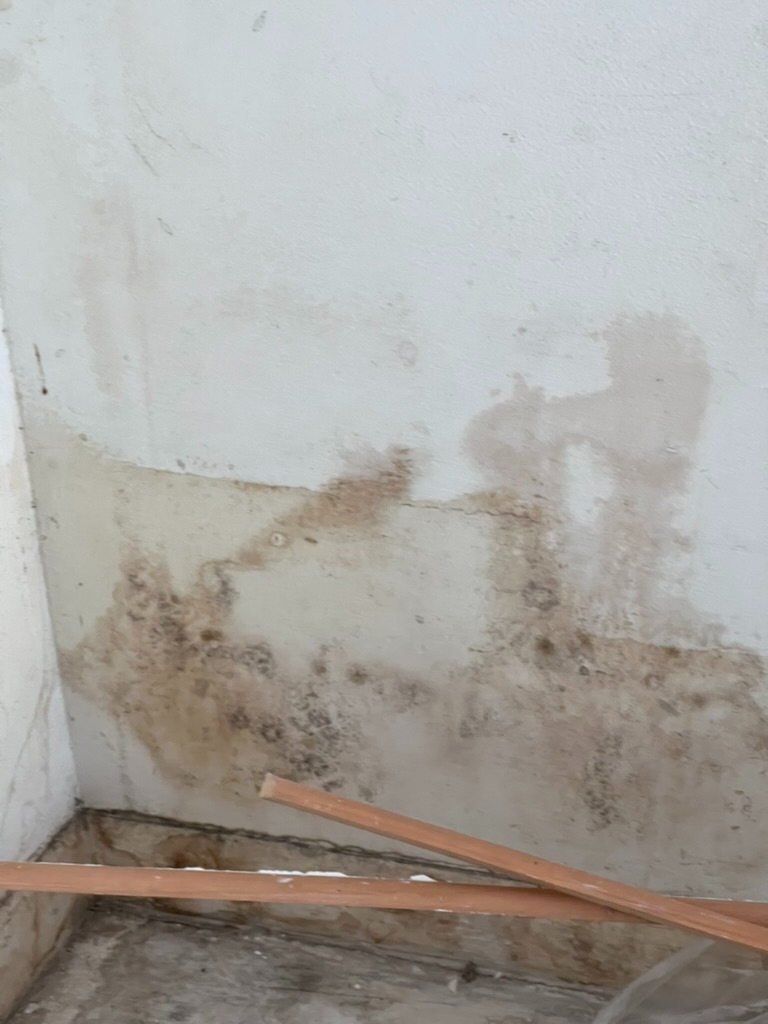
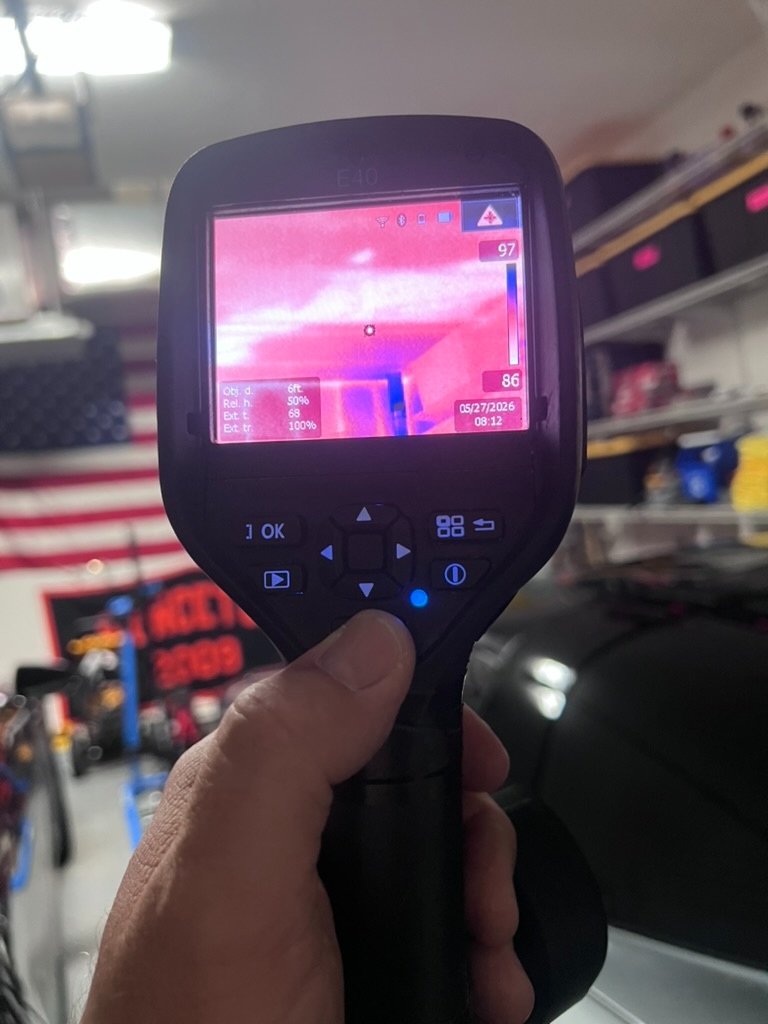
During our inspections throughout South Florida, we frequently find elevated moisture behind exterior walls that appear completely normal from the living space. Moisture mapping and thermal imaging often identify these hidden conditions well before any visible damage develops on the interior surface.
- Look for condensation trails, bubbling paint, or dark spotting below and around window frames and sliding doors.
- Check exterior stucco and window sealant for cracks, a common wind-driven rain entry point during South Florida storms.
- Run a hand along baseboards and drywall corners for warping, bubbling, or a texture change from the surrounding wall.
- Take note of any musty odor as soon as you walk in, smell often precedes visible growth by days or weeks.
- Check for sliding glass door tracks holding standing water after recent rain, a sign of failed weep holes or drainage.
- Look up in corners near the ceiling, where roof and wall leaks often show their first visible trace.
Attic & Roof
Roof age and condition are among the strongest predictors of hidden attic moisture our inspectors see. A roof nearing the end of its service life may still look intact from the ground while quietly allowing water intrusion during every significant rain event.
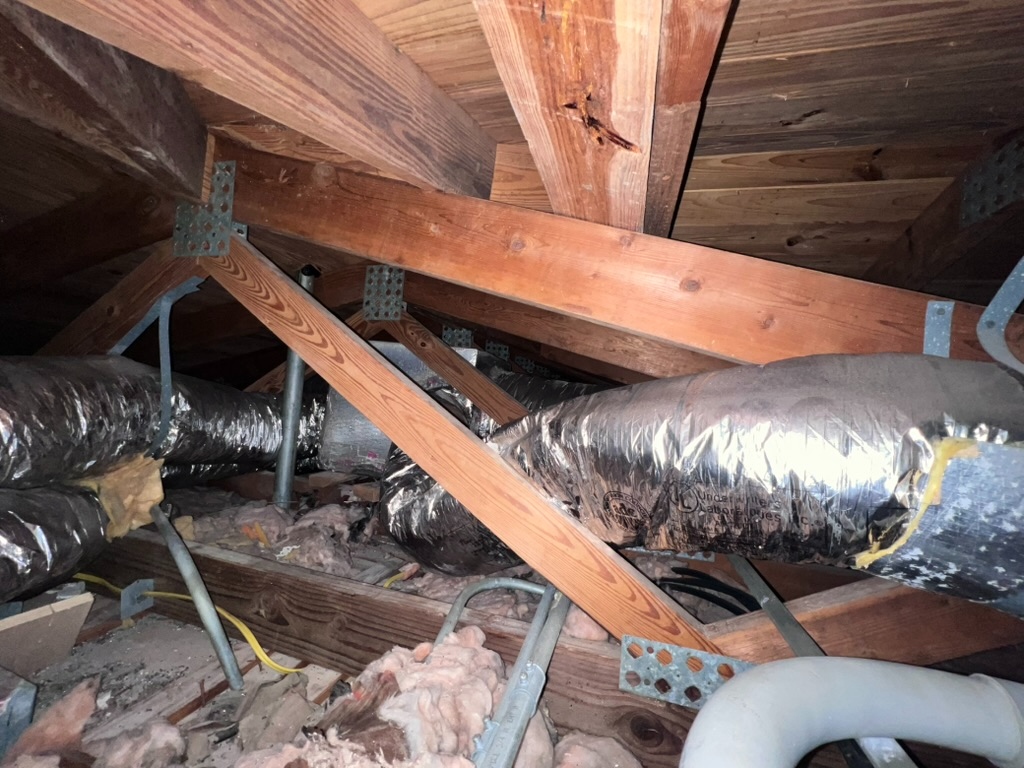
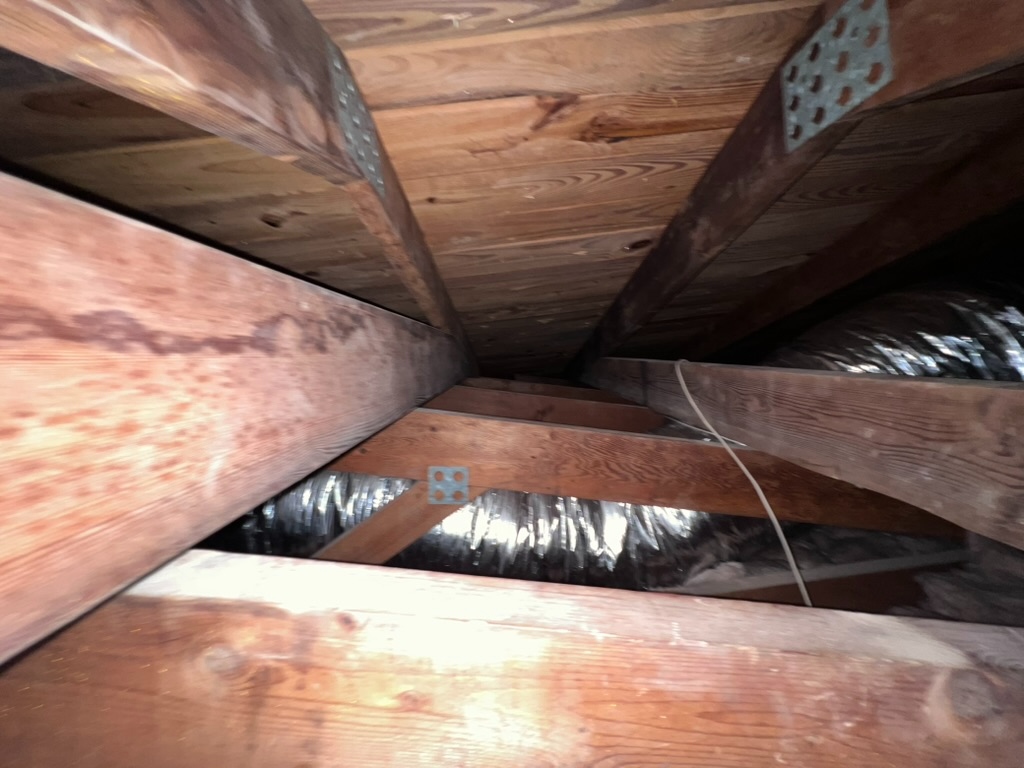
Attic staining is one of the most commonly missed red flags during a standard walkthrough, simply because most buyers never look up through the attic hatch. We recommend asking your agent whether the attic was accessed and photographed as part of any prior inspection report.
- Ask about the roof's age, roofs nearing the end of their service life are a leading cause of hidden attic moisture.
- If accessible, look for dark staining on the underside of the roof deck or discoloration around vent pipe boots.
- Check that attic ventilation (soffit and ridge vents) is not blocked by insulation, which traps humidity.
- Ask if there is any history of roof leaks, insurance claims, or repairs in the seller's disclosure.
- Look for sagging or uneven roof lines from the exterior, which can indicate long-term structural water damage.
HVAC & Ductwork
Your air conditioning system runs almost continuously in South Florida, and it is also one of the most overlooked sources of hidden mold. An HVAC mold inspection specifically targets the ductwork, coil, and drain pan areas that a general visual walkthrough cannot evaluate.
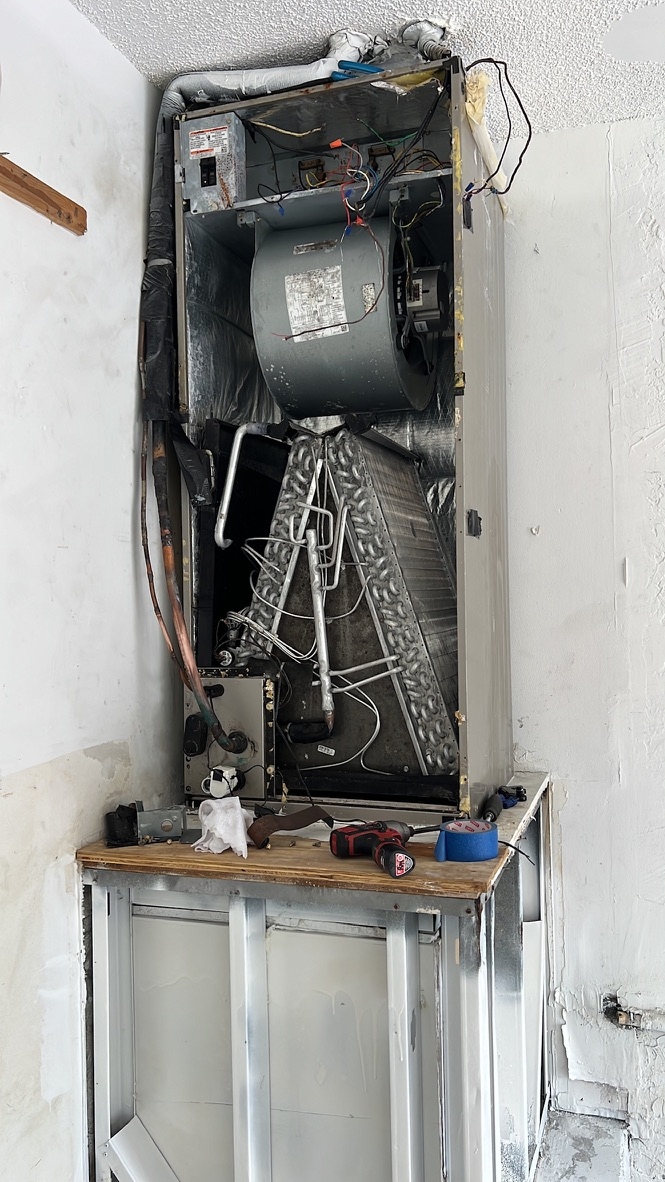
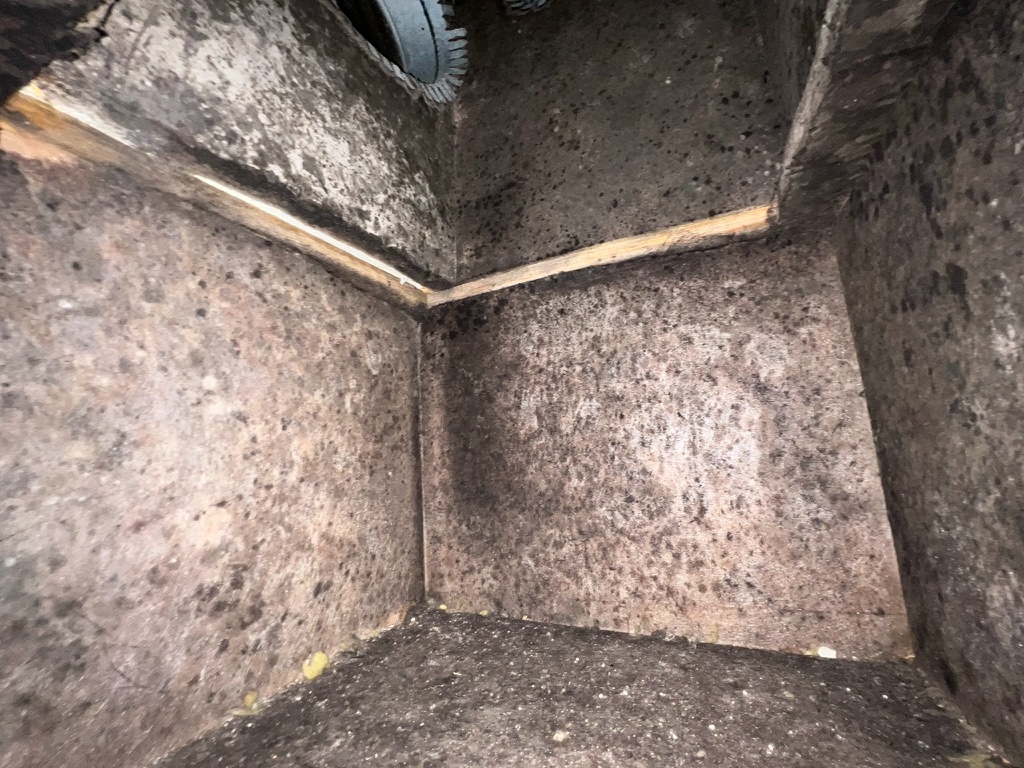
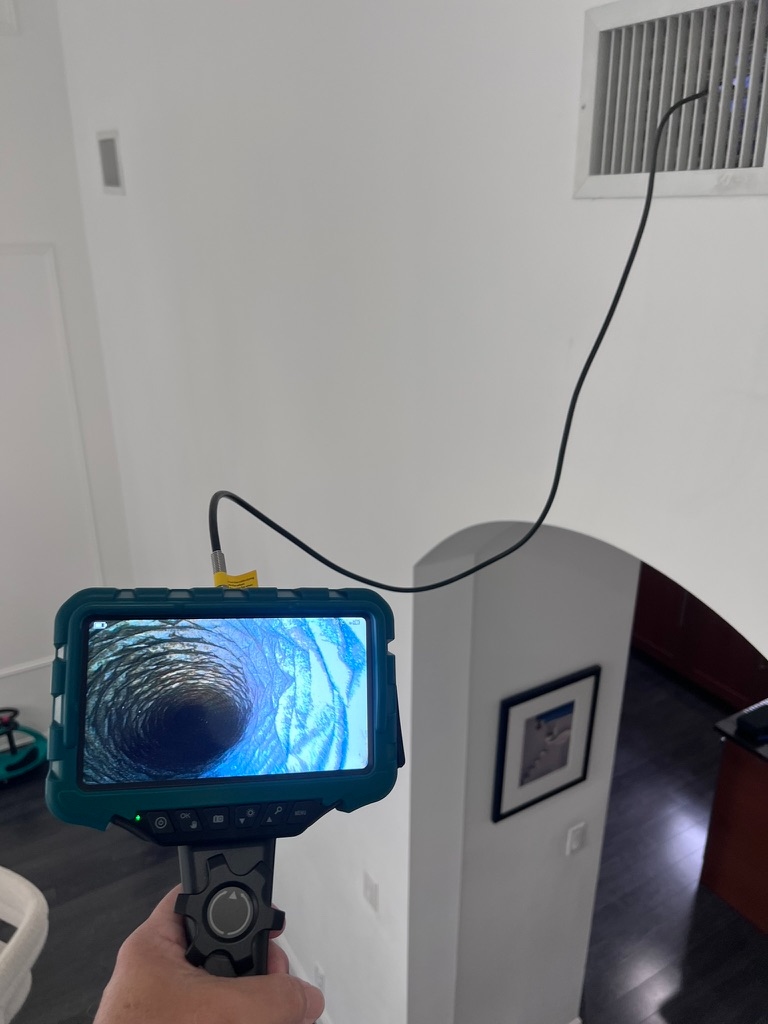
Duct interiors are one of the most consistently overlooked areas in a home buyer's own walkthrough, because the contamination is completely sealed away from view. A borescope camera and an air quality test at the supply registers are usually the only way to confirm what's actually circulating through the home.
- Ask when the AC system was last serviced and whether the condensate drain line has ever clogged or overflowed.
- Check the air handler closet floor and walls for staining, rust, or a musty smell near the unit.
- Ask whether the system is sized correctly for the square footage, an oversized system short-cycles and leaves excess humidity indoors.
- Note any musty smell specifically when the AC first kicks on, a common sign of mold growth inside the ductwork itself.
- Check the age of the HVAC system, units over 10 to 12 years old are more likely to have accumulated internal moisture issues.
Slab, Crawlspace & Exterior
Most South Florida homes are built on a concrete slab rather than a basement, but that does not eliminate moisture risk. Slab moisture migration, poor site grading, and inadequate drainage are frequent contributors to the conditions our moisture mapping inspections uncover.
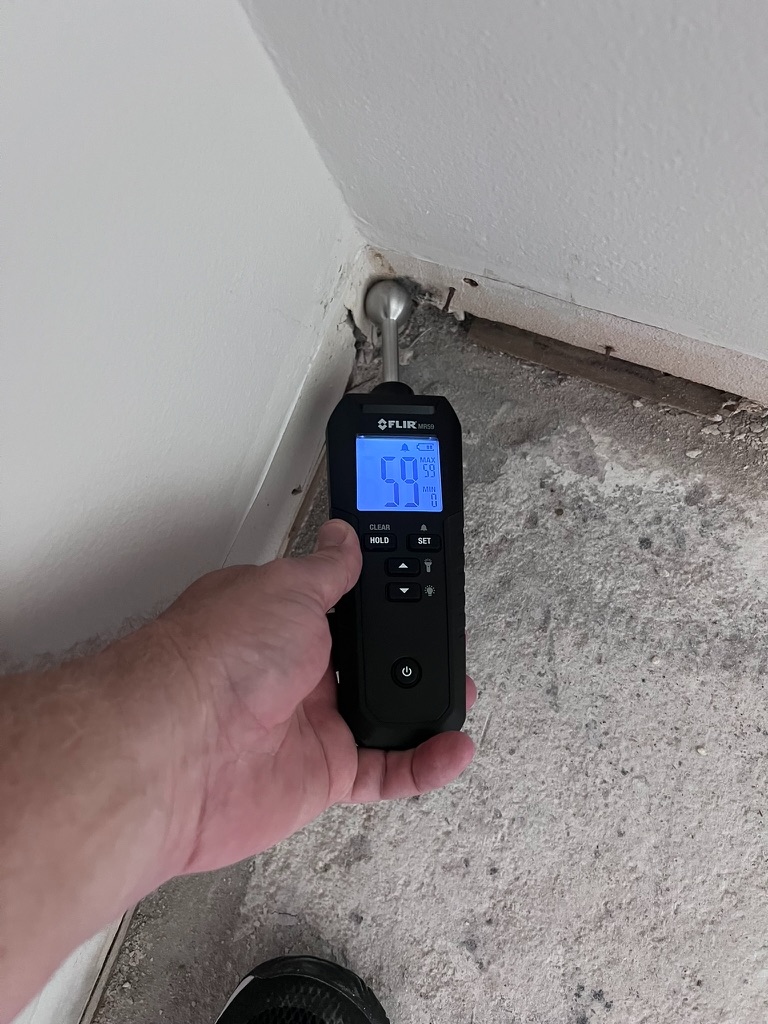
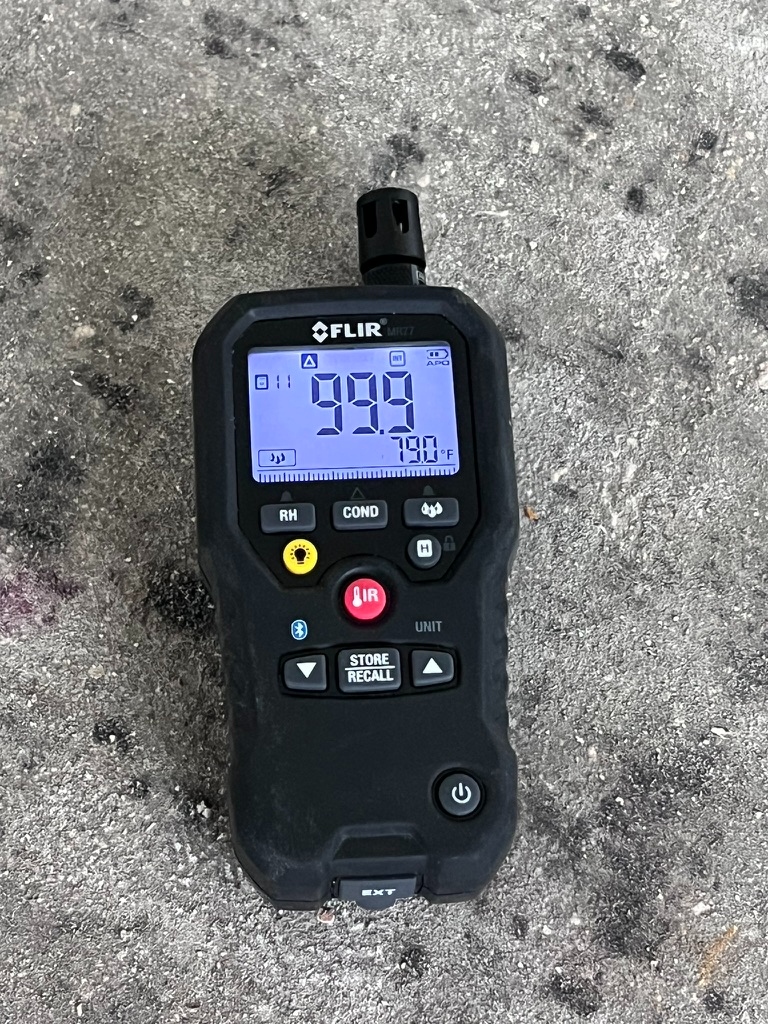
Slab moisture migration rarely shows up as an obvious puddle. In our experience, it more often shows up as a slightly cool, slightly discolored patch of flooring near an exterior wall corner that a homeowner has walked past for years without a second thought.
- Check that the property grading slopes away from the foundation, not toward it, to prevent water pooling against the slab.
- Look for efflorescence (white, chalky mineral deposits) on interior slab edges or garage walls, a sign of chronic moisture migration through concrete.
- Verify gutters and downspouts direct water at least several feet away from the foundation.
- Ask about any prior flooding, storm damage, or insurance claims tied to water intrusion at the property.
- Check flooring for cold spots or soft feel underfoot near exterior walls, which can indicate slab moisture intrusion.
Garage, Laundry & Utility Areas
Utility areas are often overlooked during a buyer's walkthrough, but they house the water heater, washing machine connections, and sometimes the air handler, all common leak sources.
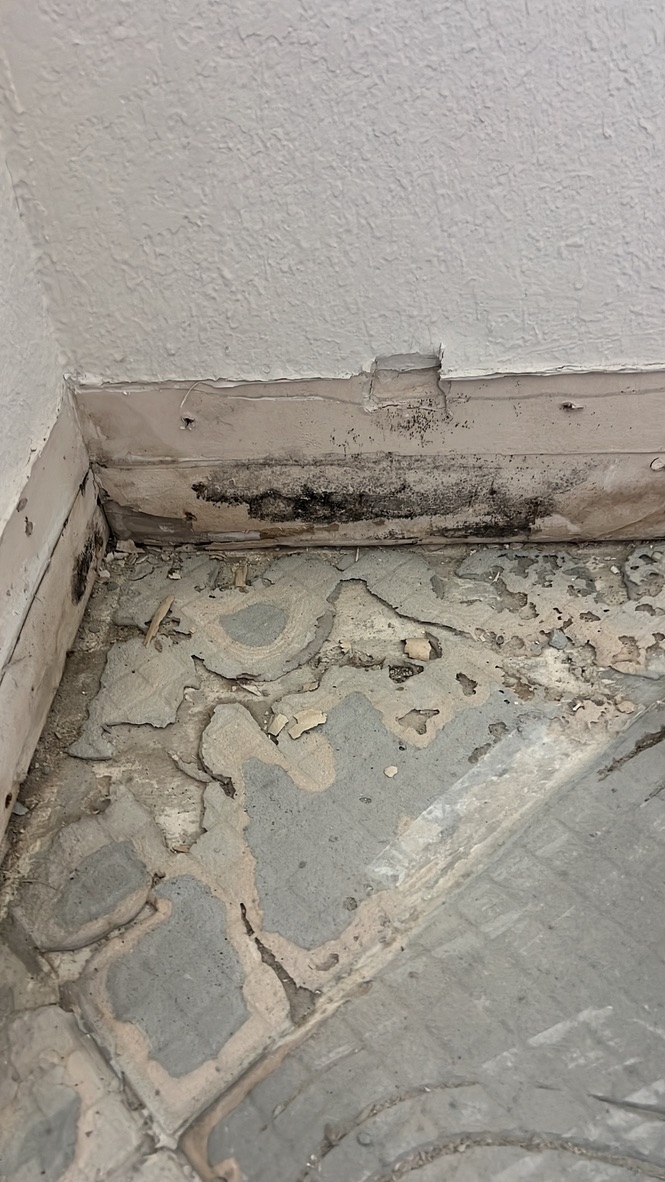
Utility closets and garages are some of the least-staged areas of a home during a showing, which actually makes them one of the more honest places to look. Boxes and storage items are frequently stacked directly in front of the exact wall section that needs the closest look.
- Check around the water heater base for rust staining, corrosion, or standing water in the drain pan.
- Look behind and beneath the washing machine for staining on the floor or wall.
- Check garage walls and ceiling for water stains, especially along the top plate where the roof meets the wall.
- Confirm the dryer vent exhausts fully to the exterior, not into the attic or garage space.
Printable Red Flags Table
Print or save this table and bring it with you on your next showing. Each red flag is paired with what it typically indicates so you know how seriously to treat it.
| What You Notice | What It Often Indicates |
|---|---|
| Musty or earthy odor | Active mold growth somewhere in the building, even if nothing is visible. |
| Discoloration on ceilings or walls | Past or ongoing water intrusion from roof, plumbing, or window leaks. |
| Bubbling or peeling paint | Moisture trapped behind the painted surface pushing outward. |
| Warped baseboards or flooring | Prolonged exposure to moisture at the floor level, often from slab or plumbing sources. |
| Condensation on windows or AC vents | Elevated indoor humidity or an undersized/failing HVAC system. |
| Fresh paint or caulk in only one room | Possible cosmetic cover-up of a recent leak repair. |
| Efflorescence (white chalky residue) | Chronic moisture migration through concrete slab or block walls. |
| Soft or spongy flooring | Subfloor damage from long-term, undetected water exposure. |
| Musty smell only when AC runs | Likely mold growth inside ductwork or on the evaporator coil. |
| Vacant or unlisted for a long period | Unconditioned, closed-up homes can develop mold within days in South Florida's climate. |
Questions to Ask the Seller or Listing Agent
Direct questions can surface information that a visual inspection cannot. Sellers in Florida are legally required to disclose known material defects, but asking specific questions often produces more useful answers than a generic disclosure form.
- Has this property ever had a water damage insurance claim, roof leak, or plumbing failure?
- Has any mold remediation ever been performed on this property, and if so, is there a clearance report available?
- How old is the roof, water heater, and AC system, and when were they last serviced?
- Has the property been vacant recently? Vacant, unconditioned homes in South Florida's climate can develop mold within days.
- Are there any known drainage or grading issues on the property, especially after heavy rain?
- Has the property ever flooded or had standing water inside during a storm?
Understanding Florida Seller Disclosure Requirements
Florida law requires sellers to disclose known material defects that affect the value of a property and are not readily observable to a buyer. This has historically included known mold problems, past water damage, and roof leak history under the doctrine established in Johnson v. Davis. However, disclosure obligations only cover what the seller actually knows, a seller who is genuinely unaware of a hidden moisture problem behind a wall is not required to disclose something they never discovered.
This is precisely why an independent inspection matters so much. Relying solely on seller disclosure assumes the seller has perfect knowledge of every corner of their property, which is rarely realistic, especially with homes that have changed ownership multiple times or that have unfinished areas like attics and crawlspaces that are inspected infrequently.
This section is provided for general informational purposes and is not legal advice. Consult a Florida real estate attorney regarding your specific transaction and disclosure rights.
Professional Inspection vs. DIY Checklist: Where the Line Is
This checklist is designed to help you catch obvious visual red flags during a normal property showing, when you typically have limited time and no specialized equipment. It is genuinely useful, many serious problems do leave visible clues if you know exactly where to look. But it has real limits that every buyer should understand before relying on it as their only line of defense.
| What This Checklist Can Do | What Only a Licensed Inspection Can Do |
|---|---|
| Identify visible staining, discoloration, and odors | Detect moisture behind walls, under flooring, and above ceilings using thermal imaging |
| Flag questions worth asking the seller | Confirm actual moisture content in building materials with calibrated meters |
| Help prioritize which rooms need closer attention | Collect air and surface samples for accredited laboratory species identification |
| Support a general sense of property condition | Produce a signed, licensed report accepted by insurance carriers and lenders |
If you notice even one or two of the red flags in this checklist, that is the signal to move from self-assessment to a professional mold inspection and mold testing combination before you finalize your purchase decision.
What Happens During a Professional Pre-Purchase Mold Inspection
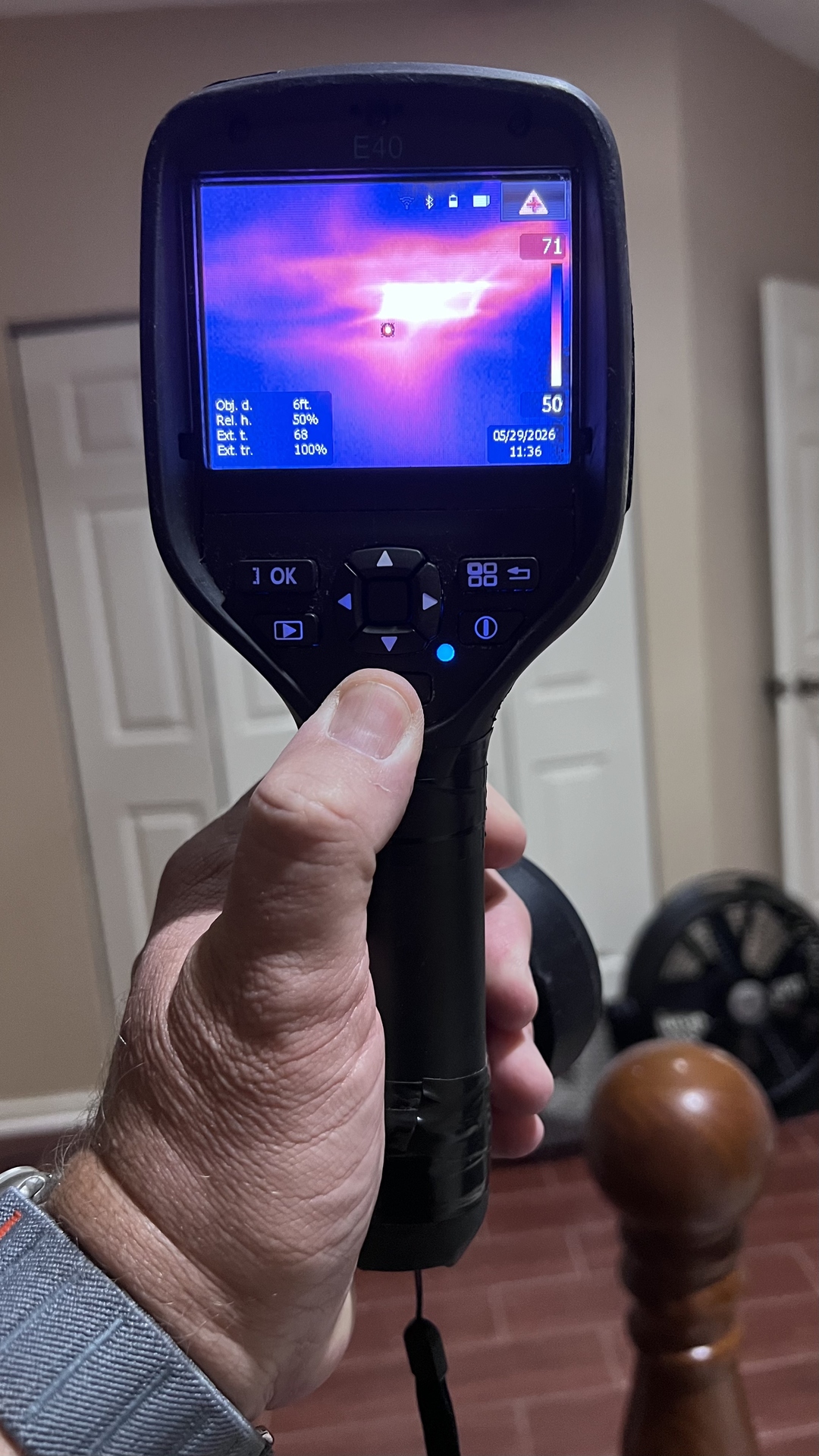
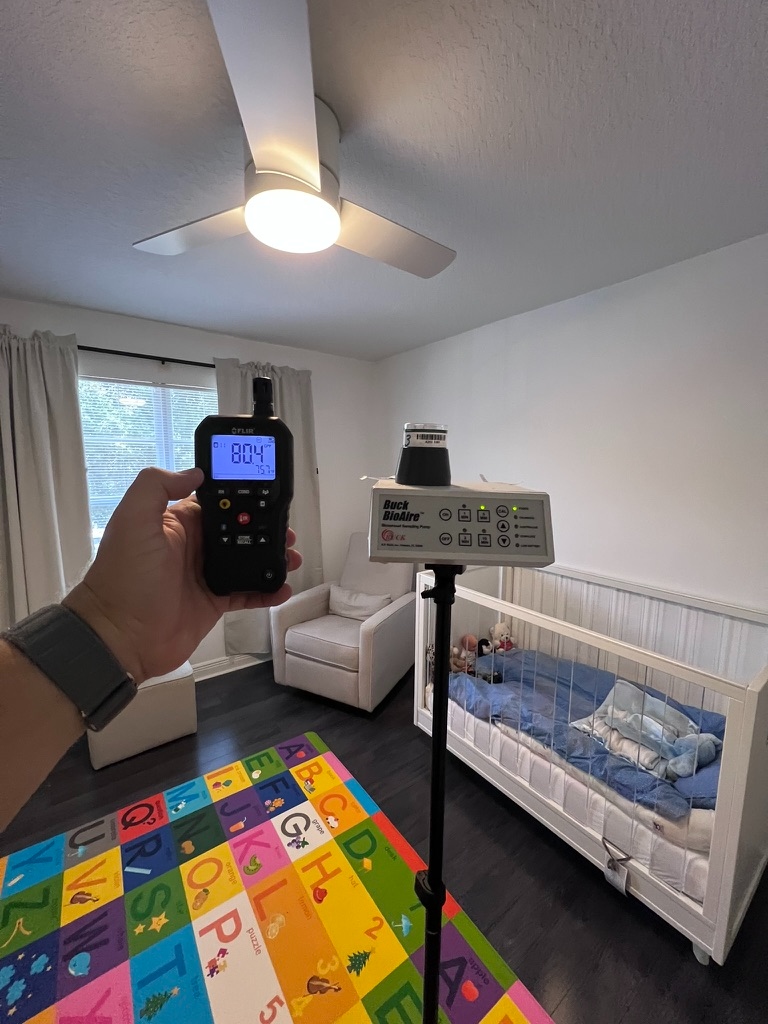
A Home Enviro pre-purchase inspection typically takes 60 to 90 minutes on-site and follows a consistent, documented five-step process so your report holds up for insurance, lending, and negotiation purposes.
Pre-Purchase Mold Inspection Cost Table
Costs vary based on property size and the number of samples needed. Here is Home Enviro's current pricing structure for pre-purchase inspections.
| Package | Includes | Starting Price |
|---|---|---|
| Targeted Area Assessment | 2 air samples, evaluation of one area of concern, certified lab analysis, digital report | $325 |
| Professional Mold Assessment | Full property inspection up to 2,500 sq ft, thermal imaging, moisture mapping, optional lab testing | $225 |
| Expanded Professional Mold Assessment | Full property inspection from 2,501 to 5,000 sq ft, thermal imaging, moisture mapping, optional lab testing | $350 |
| Additional Samples | Each extra air, surface, or bulk sample beyond package inclusions | $125 each |
| Post-Remediation Verification | Independent clearance testing after remediation, required by Florida law | $375 |
Call (954) 994-8847 for a free, no-obligation quote tailored to the specific property you are considering.
When to Schedule an Inspection During Your Purchase Timeline
Timing matters. Schedule your pre-purchase mold inspection during your due diligence or inspection contingency period, ideally right after your offer is accepted and before your standard home inspection deadline. This gives you lab-confirmed results early enough to negotiate repairs, request a price reduction, or walk away from the deal with your deposit protected.
| Purchase Stage | Recommended Action |
|---|---|
| Before making an offer | Use this checklist during showings to flag any properties needing extra scrutiny. |
| Offer accepted / under contract | Schedule your professional mold inspection immediately, within your contingency window. |
| Inspection results received | Review findings with your agent and attorney before your contingency deadline expires. |
| Before closing | If remediation was negotiated, request post-remediation verification (PRV) documentation. |
What to Do If Mold Is Found Before Closing
If your inspection confirms mold or significant moisture intrusion, you generally have three paths available, depending on your purchase contract and inspection contingency terms:
- Request remediation before closing: Ask the seller to hire a licensed remediation contractor and provide independent post-remediation verification (PRV) before you close, as required under Florida Statute 468.8411.
- Negotiate a credit or price reduction: Some buyers prefer to close with a documented credit to cover remediation costs themselves after closing.
- Exercise your inspection contingency: If the findings are significant, your contract may allow you to cancel and recover your deposit.
Whichever path you choose, remember that under Florida Statute 468.8411, the company that performs mold remediation cannot also perform the clearance test confirming the job was successful. An independent, inspection-only firm like Home Enviro must conduct that verification.
Printable Room-by-Room Checklist
Download the free PDF version below, or use the print button to save a clean, printer-friendly version of this checklist for your next showing.
The PDF includes the full room-by-room checklist, seller questions, pre-closing checklist, and humidity reference table on 2 printer-friendly pages.
| Area | Checked | Notes |
|---|---|---|
| Under kitchen & bathroom sinks | ☐ | |
| Grout/caulk around tubs & showers | ☐ | |
| Flooring near toilets & tubs | ☐ | |
| Bathroom exhaust fan venting | ☐ | |
| Windows, sliding doors & frames | ☐ | |
| Exterior stucco & sealant | ☐ | |
| Baseboards & drywall corners | ☐ | |
| Roof age & visible attic staining | ☐ | |
| Attic ventilation (soffit/ridge vents) | ☐ | |
| AC service history & condensate line | ☐ | |
| Air handler closet condition | ☐ | |
| Site grading & drainage | ☐ | |
| Slab edges for efflorescence | ☐ | |
| Water heater & laundry connections | ☐ | |
| Garage walls & ceiling | ☐ | |
| Overall musty odor check | ☐ |
Questions to Ask Before Closing
Print this short list separately and review it with your agent or attorney in the final days before closing.
| # | Question | Answered |
|---|---|---|
| 1 | Has a licensed mold inspection been completed, and have I reviewed the full lab report? | ☐ |
| 2 | If mold was found, was independent post-remediation verification (PRV) completed and documented? | ☐ |
| 3 | Have any negotiated repairs or credits been confirmed in writing in the final contract? | ☐ |
| 4 | Has the seller disclosed all known water damage, leaks, or prior remediation in writing? | ☐ |
| 5 | Do I have copies of all inspection reports, lab results, and disclosures for my records? | ☐ |
| 6 | Have I confirmed my homeowners insurance policy is bound and active as of closing day? | ☐ |
Schedule Your Pre-Purchase Mold Inspection
Licensed, independent, and conflict-free. Home Enviro never remediates, so your report is unbiased, accepted by real estate agents, attorneys, lenders, and insurance companies throughout Broward, Palm Beach, and Miami-Dade Counties.
Related Resources
Related Services
Recent Case Studies
Real pre-purchase and moisture investigation outcomes from South Florida properties, drawn from our published case study library.
Related City Pages
Featured Resources
Continue building your knowledge of South Florida mold risk with these related guides from our Resource Center.
Common Home Buyer Mold Questions
Should I get a mold inspection before buying a house in Florida?
Yes. South Florida's year-round humidity, frequent storms, and high water table make hidden moisture intrusion and mold growth common even in homes that look well maintained. A pre-purchase mold inspection with thermal imaging and moisture mapping can uncover problems behind walls and under flooring that a standard home inspection does not test for.
What should I look for when touring a home for signs of mold?
Look for musty odors, discoloration or staining on ceilings and walls, peeling paint or bubbling drywall, warped baseboards, condensation around windows and AC vents, and any recent paint or repairs that could be hiding water damage. These are visual clues, but many mold problems are only detectable with moisture meters and thermal imaging.
Can a home inspector find mold during a standard home inspection?
A general home inspector may note visible staining or obvious mold growth, but most are not licensed to test for mold or use thermal imaging and moisture meters to detect hidden intrusion behind walls, under flooring, or inside HVAC systems. In Florida, only a licensed mold assessor can perform a certified mold inspection and interpret lab results.
How much does a pre-purchase mold inspection cost?
Home Enviro's pre-purchase mold inspections start at $325 for a Targeted Area Assessment with 2 air samples, $225 for a Professional Mold Assessment on homes up to 2,500 square feet, and $350 for an Expanded Professional Mold Assessment on homes from 2,501 to 5,000 square feet, both with thermal imaging and moisture mapping. Call (954) 994-8847 for a free quote specific to your property.
When during the home buying process should I schedule a mold inspection?
Schedule your mold inspection during your due diligence or inspection period, right after your offer is accepted and before your standard home inspection contingency deadline. This gives you lab-confirmed results in time to negotiate repairs, a price reduction, or walk away from the deal if needed.
Who pays for a mold inspection when buying a home?
In most South Florida real estate transactions, the buyer pays for their own independent mold inspection during the due diligence period, similar to a home inspection or a four-point inspection. Some buyers negotiate for the seller to cover the cost, especially if red flags were disclosed or observed during the walkthrough.
What happens if mold is found during a pre-purchase inspection?
If mold is confirmed by lab results, buyers typically have several options depending on their contract: request the seller remediate the issue before closing, negotiate a credit or price reduction to cover remediation costs, or exercise an inspection contingency to cancel the contract. Your real estate agent or attorney can advise on the best path based on your specific purchase agreement.
Is a mold inspection different from a mold test?
Yes. A mold inspection is the full visual and instrument-based property assessment, including moisture mapping and thermal imaging, that identifies where risk factors exist. Mold testing is the laboratory science component that analyzes air, surface, or bulk samples to confirm species and concentration. A complete pre-purchase package includes both.
What time of year is mold risk highest in South Florida?
Mold risk in South Florida rises sharply during the June through November wet season, when tropical storms, hurricanes, and daily humidity spikes are most common. However, chronic issues like AC condensation and slab moisture migration can create risk year-round, including during the drier winter months.
What indoor humidity level should I look for when touring a home?
A healthy target indoor relative humidity range is 40% to 45%. Readings between 50% and 55% are considered marginal and worth monitoring, while readings of 60% or higher are considered critical, since mold colonies establish and spread rapidly above that threshold.